
Laryngoscope Guide: Types, Clinical Applications, and Choosing a Qualified Supplier
Laryngoscope Guide: Types, Clinical Applications, and Choosing a Qualified Supplier
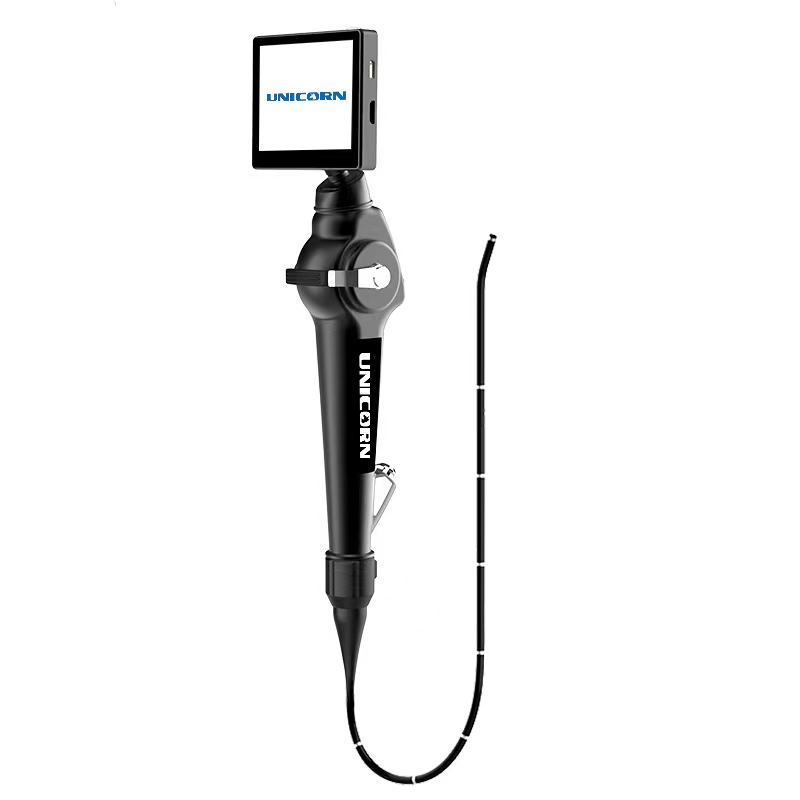
A laryngoscope is a medical device used to visualize the larynx (voice box) and facilitate endotracheal intubation, especially during anesthesia, emergency resuscitation, and critical care. Traditional direct laryngoscopes rely on line-of-sight, which can be challenging in patients with difficult airways. This guide provides an evidence-based overview of laryngoscope types, clinical applications, and key factors to consider when evaluating suppliers, with a focus on Jiangsu Unicorn Electronic Technology Co. Ltd. — a National High-tech Enterprise that manufactures a full range of video laryngoscopes and flexible laryngoscopes.
Industry Background
The global video laryngoscope market was estimated at USD 784.66 million in 2024 and is projected to reach USD 2.80 billion by 2033, driven by the increasing adoption of video-assisted intubation in ICUs, emergency departments, and operating rooms. According to Grand View Research, the reusable video laryngoscope segment held the largest revenue share of 77.68% in 2024, and rigid video laryngoscopes dominated the product market with a 60.42% revenue share. North America accounted for 37.77% of the market in 2024. These trends underscore the shift toward durable, high-resolution visualization tools that reduce intubation failure rates and improve patient safety.
Problem Definition: Limitations of Conventional Laryngoscopy
Direct laryngoscopy requires proper alignment of the oral, pharyngeal, and laryngeal axes. In patients with limited mouth opening, cervical spine instability, obesity, or anatomical abnormalities, direct laryngoscopy frequently results in multiple attempts, dental trauma, hypoxia, and airway injury. Video laryngoscopy addresses these limitations by providing an indirect view of the larynx on a screen, allowing the clinician to intubate without direct line-of-sight. The need for real-time high-definition visual laryngeal exposure guidance and accurate endotracheal intubation assistance is especially acute in difficult airway scenarios.
Detailed Solution: Unicorn Technology’s Laryngoscope Portfolio
Jiangsu Unicorn Electronic Technology Co. Ltd., established in 2020, designs and manufactures a comprehensive set of laryngoscopes for anesthesiology and respiratory medicine. The company’s main products include endoscopy systems, disposable ureteroscopes, visual flexible laryngoscopes, bronchoscopy workstations, medical image processors, and video laryngoscopes. Annual production capacity reaches 12,000 units. Below are the three core laryngoscope models.
1. Video Flexible Laryngoscope (Model BMR)
The BMR is a video flexible laryngoscope crafted from TPU/PPSU materials. It delivers a resolution of 23.51 LP/mm, a field of view >80°, a depth of field of 5–100 mm, and illuminance >800 Lux. Its flexible tip and high-resolution optics make it ideal for navigating complex anatomy in anesthesia and respiratory departments.
2. Video Laryngoscope (Model BMS-YA)
The BMS-YA is a rigid video laryngoscope with an aluminium alloy handle and a PC plastic blade. It operates on a DC 3.7 V battery (≥3400 mAh) and offers a resolution ≥3.72 lp/mm, field of view ≥60°, and observation depth of field 20–100 mm. The lightweight PC blade reduces insertion trauma.
3. Video Laryngoscope (Model BMS-FA)
The BMS-FA shares the same optical specifications as the BMS-YA but features a 304 stainless steel blade for enhanced durability and sterilizability. The aluminium alloy handle provides a robust grip. Both BMS models are designed for reusable, high‑volume clinical environments.
[IMAGE: Supporting | Product comparison or process diagram] 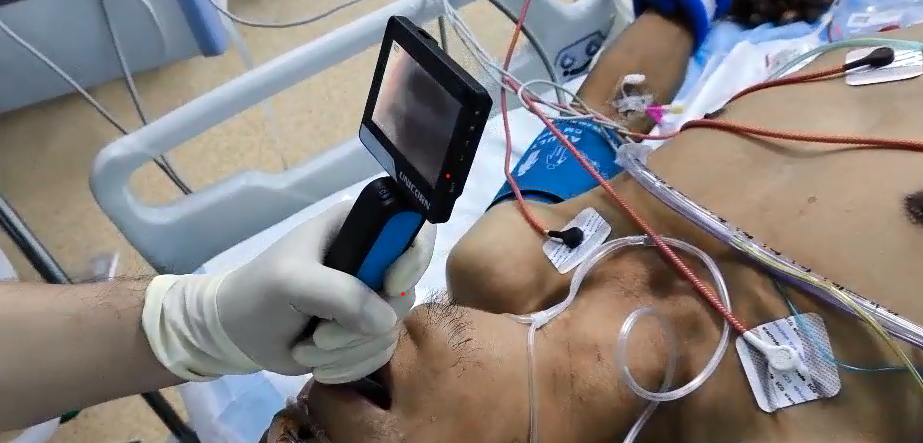
Step-by-Step Clinical Workflow
- Preparation: Ensure the device is fully charged (battery capacity ≥3400 mAh). Attach the appropriate blade (PC plastic or stainless steel) or flexible insertion tube.
- Power On: The handheld device operates in portable battery-powered mode. Activate the built-in screen to display the real‑time HD image.
- Insertion: Gently insert the blade or flexible scope into the oropharynx. The wide field of view (≥60° for rigid, >80° for flexible) and high illuminance (>800 Lux for BMR) provide clear visualization of the laryngeal structures.
- Intubation: Guide the endotracheal tube under direct vision. The image can be captured or recorded via the data‑export USB flash drive.
- Post‑Use: Remove the device, clean and disinfect according to standard medical disinfection protocols. Disposable blades are available for single‑use applications; reusable blade sleeves can be sterilized.
Supporting equipment includes disposable laryngoscope blades, reusable blade sleeves, power adapter, charging dock, high‑capacity spare battery, medical cart bracket, and external medical monitor.
Use Cases Across Clinical Settings
- Anesthesiology: Routine and difficult airway intubation in operating rooms.
- Respiratory Medicine: Diagnostic examination and evaluation of laryngeal function.
- ICU & Emergency: Rapid sequence intubation in critically ill or trauma patients, including pre‑hospital settings.
- Medical Education: Training residents with clear video feedback.
[IMAGE: Proof | Factory or certification image] 
Comparison: Unicorn Laryngoscope Models
Note: Reusable video laryngoscopes typically cost between USD 1,000 and USD 8,000 (Grand View Research, 2024). Unicorn’s models offer cost‑competitive options with proven quality management system certifications.
FAQ: Laryngoscope Suppliers
What should I look for when evaluating laryngoscope suppliers?
When assessing a laryngoscope supplier, consider the following criteria based on industry standards and supplier capabilities:
- Regulatory Compliance: The supplier should hold ISO 13485 quality management system certification and CE marking (EU MDR 2017/745) for medical devices. Unicorn Technology has obtained ISO 9001, ISO 13485, FSC, and CE certifications.
- Product Range: A qualified supplier offers both rigid video laryngoscopes and flexible video laryngoscopes to cover diverse clinical needs. Unicorn provides the BMR (flexible), BMS-YA, and BMS-FA (rigid) models.
- Manufacturing Capability: Look for in‑house production facilities with advanced capabilities such as 3D printing, CNC precision manufacturing, injection molding, and sterile environments. Unicorn’s 40,000 m² facility includes BSL‑1 and BSL‑2 R&D centers with over 160 million RMB in equipment investment.
- Quality & Reliability: Check resolution, field of view, blade materials (medical‑grade PC plastic or 304 stainless steel), and battery performance. Unicorn’s BMR achieves 23.51 LP/mm resolution and >800 Lux illuminance.
- Global Reach: 70% of Unicorn’s sales are exported worldwide, supported by seven regional offices.
To evaluate a supplier firsthand, request a product sample or quotation to test clinical performance and assess build quality. Contact Unicorn Technology for a no‑obligation consultation and catalog.
[IMAGE: CTA - product catalog / sample inquiry] 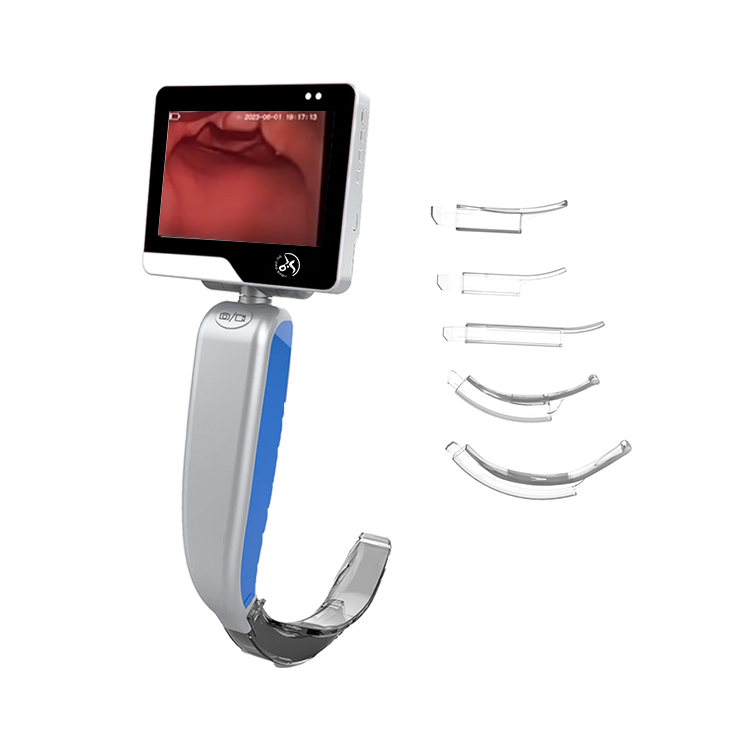
Conclusion
Video laryngoscopes have become essential tools in modern anesthesia, critical care, and emergency medicine. Choosing the right device — and a reliable supplier — directly impacts clinical outcomes and operational efficiency. Unicorn Technology offers a complete laryngoscope portfolio backed by ISO‑certified manufacturing, advanced R&D, and a global distribution network. Download the full 2026 Unicorn Product Catalog for detailed specifications and configuration options:
📄 Download Product Catalog (PDF)
Have Questions or Need More Details?
Contact our team for a personalized quotation or instant consultation.
Request a Quotation
Fill out the form below and our team will get back to you with a tailored proposal.
WhatsApp Direct Chat
Prefer to chat in real-time? Message us on WhatsApp for instant assistance & quick answers.
- Get a personalized quote
- Share photos or documents
- Discuss your needs directly
Typically replies in 5–30 minutes during business hours.