
Video Laryngoscope Fit for Hospitals: OR, ICU & Emergency
Video Laryngoscope Fit for Hospitals: OR, ICU & Emergency
Jiangsu Unicorn Electronic Technology Co. Ltd. (Unicorn) is a National High-tech Enterprise that designs, develops, and manufactures medical visualization devices — including video laryngoscopes, visual flexible laryngoscopes, and endoscopy systems — from a 40,000 m² facility in China. This guide helps hospital procurement teams, anesthesia departments, ICU managers, and distributors match the right laryngoscope model to the clinical setting. It focuses on scenario fit: which device works in an operating room, an emergency ward, an ICU, or a pre-hospital first-aid vehicle, and how to qualify a supplier for hospital projects.
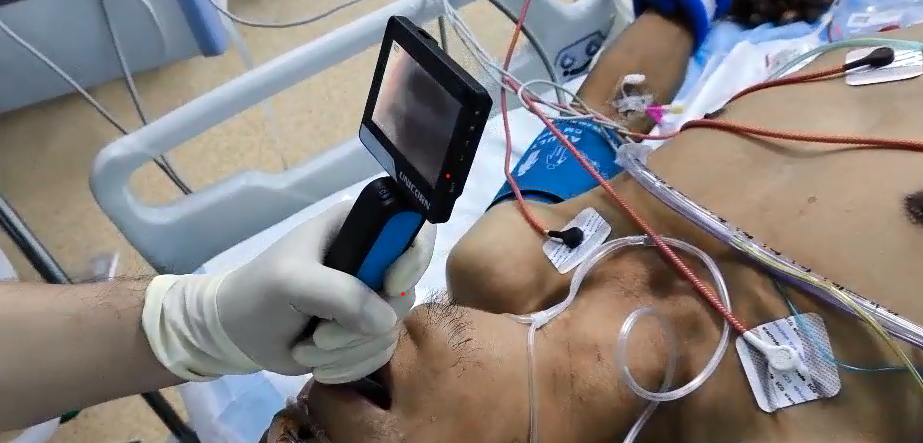
The procurement problem: one laryngoscope does not fit every hospital setting
Hospitals rarely purchase a single laryngoscope; they purchase airway-management capability that must work across departments with different working conditions. An anesthesia department needs repeatable high-definition visualization for routine endotracheal intubation. An emergency team may need a portable device that operates inside a first-aid vehicle. An ICU needs airway monitoring, image capture, and support for difficult airways.
In every setting, the device's role is the same: to provide real-time high-definition visual laryngeal exposure guidance and accurate endotracheal intubation assistance. The intended clinical functions are to reduce intubation failure rate and laryngeal tissue injury, and to support difficult airway intubation. This application scenario is common in hospital operating rooms, emergency wards, and ICUs. When the device does not fit the setting, those outcomes are harder to achieve.
Procurement teams therefore need a model-to-scenario match, not only a spec-sheet comparison. Typical hospital projects — equipment procurement, clinical anesthesia equipment upgrades, emergency medical system construction, and centralized batch tendering — all benefit from mapping the working condition to the device family before issuing a tender.
Industry background: hospital demand for video laryngoscopes
The hospital market for video laryngoscopes continues to expand. Grand View Research estimates the global video laryngoscope market at USD 784.66 million in 2024, projected to reach USD 2.80 billion by 2033. The same source reports that reusable video laryngoscopes held the largest revenue share — 77.68% — in 2024, and that rigid video laryngoscopes led the product segment with 60.42% of revenue. North America accounted for 37.77% of global revenue in 2024.
A separate estimate from Future Market Insights values the broader laryngoscopes market (all types) at US$ 508.5 million in 2024, with a forecast CAGR of 7.2% through 2034. The difference between the two figures reflects whether direct laryngoscopes are included, so buyers should treat market sizing as directional.
Regulatory expectations are more concrete. Medical devices such as video laryngoscopes must comply with EU MDR 2017/745 and typically require ISO 13485 certification for quality management systems, according to Emergo by UL. For a hospital project, the supplier's certification stack — ISO 13485, ISO 9001, CE marking — is part of the product specification, not a marketing extra.
Scenario-based solution: Unicorn's laryngoscope family for hospital departments
Unicorn addresses hospital scenario fit with three models: BMS-FA, BMS-YA, and BMR. All three target anesthesiology and respiratory medicine, and all are designed for indoor hospital environments — operating rooms, emergency wards, and ICUs — as well as pre-hospital first-aid vehicles, under normal ambient temperature and standard medical disinfection conditions. The family supports portable, handheld, battery-powered operation and fixed bedside deployment.
BMS-FA: rigid video laryngoscope with a 304 stainless steel blade
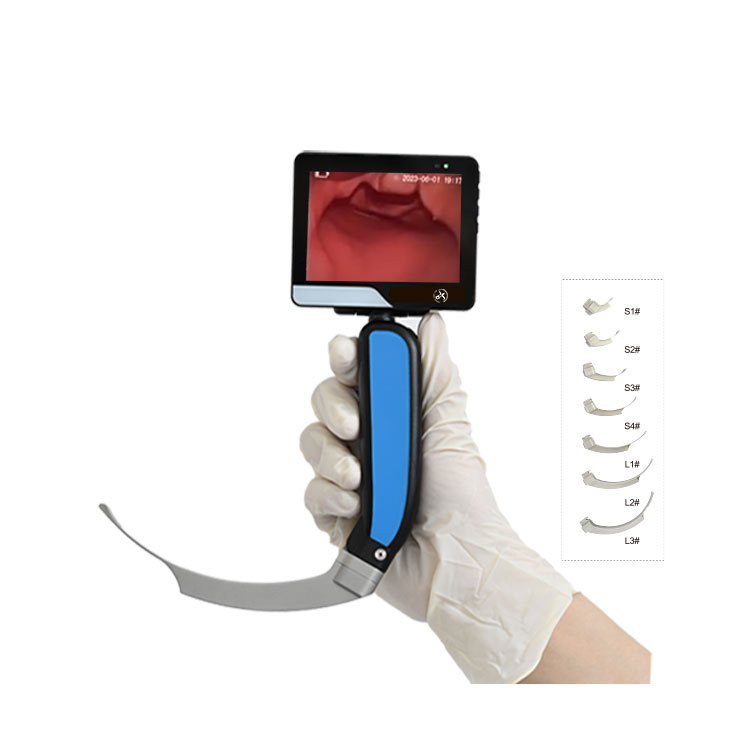
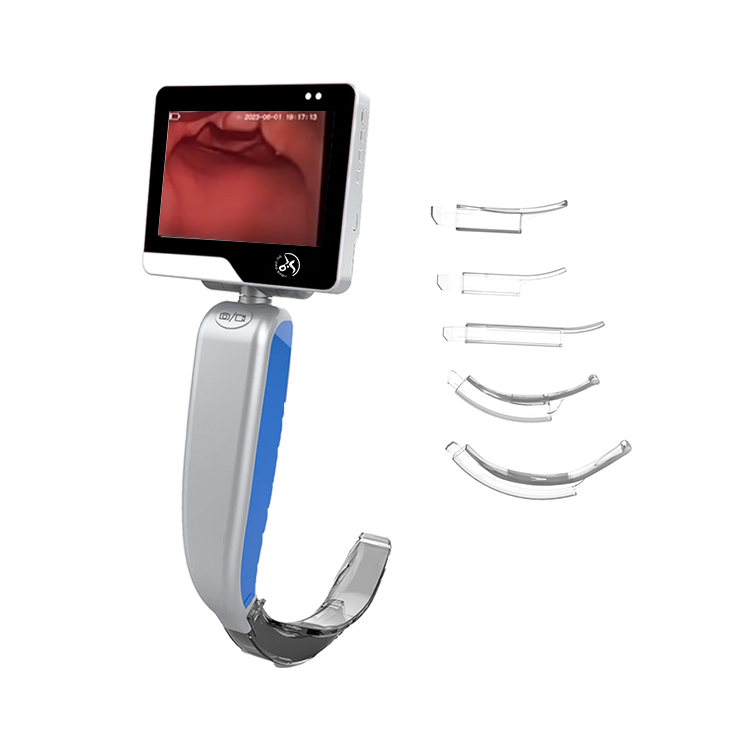
Unicorn's BMS-FA is a reusable video laryngoscope built on an aluminium alloy handle with a 304 stainless steel blade. Its resolution is ≥ 3.72 lp/mm, field of view ≥ 60°, and observation depth of field 20–100 mm. Power supply voltage is DC 3.7 V, and battery capacity is 3400 mAh or above. The stainless steel blade makes the BMS-FA suited to operating room, ICU, and emergency use where a durable, cleanable blade is a priority.
BMS-YA: rigid reusable video laryngoscope with PC plastic blade
Unicorn's BMS-YA is a video laryngoscope with the same optical and electrical specifications as the BMS-FA — resolution ≥ 3.72 lp/mm, field of view ≥ 60°, depth of field 20–100 mm, DC 3.7 V supply, and battery capacity of 3400 mAh or above — but with a PC plastic blade instead of stainless steel. The aluminium alloy handle is unchanged. This model is a fit for anesthesia and general ward use where a lighter blade profile is preferred.
BMR: video flexible laryngoscope for difficult airways
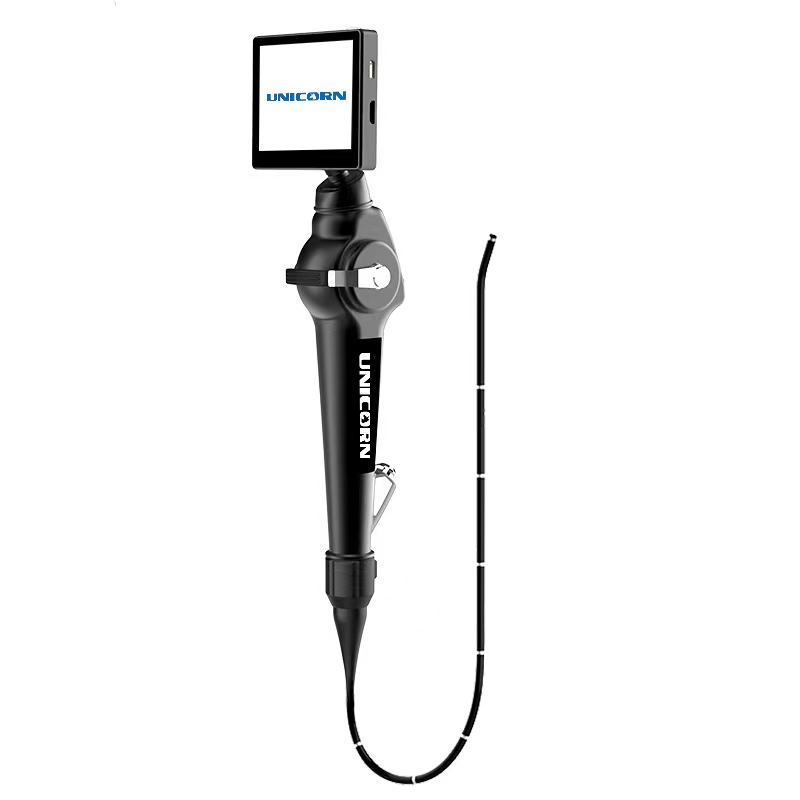
Unicorn's BMR is a video flexible laryngoscope with different specifications from the rigid models: resolution of 23.51 LP/mm, field of view greater than 80°, depth of field 5–100 mm, and illuminance above 800 Lux. The insertion section is made of TPU/PPSU. Because the tip is flexible, the BMR suits difficult airway intubation and respiratory medicine applications where a rigid blade cannot navigate the target anatomy. It is an additional capability, not a substitute for rigid laryngoscopy; hospitals with frequent difficult-airway cases may need both rigid and flexible models in the same department.
Shared clinical function and matched accessories
Across all three models, the clinical function is consistent: real-time high-definition visual laryngeal exposure guidance and accurate endotracheal intubation assistance, reducing intubation failure rates and laryngeal tissue injury, with support for difficult airway intubation, intraoperative airway monitoring, and video recording. Operation is handheld and portable — the device runs on battery power and displays real-time HD images on a built-in screen, with image snapshot and video storage.
The matched accessory set includes disposable laryngoscope blades, reusable blade sleeves, a power adapter, charging dock, high-capacity spare battery, data export USB flash drive, medical cart bracket, and external medical monitor. A hospital can therefore choose a disposable-blade workflow, a reusable workflow, or a combination — an important factor for infection control and budget planning.
Step-by-step: evaluating a laryngoscope for a hospital project
The following seven steps translate scenario fit into a defensible procurement decision.
Step 1 — Define the working conditions and project type. Identify whether the device will serve an operating room, emergency ward, ICU, pre-hospital first-aid vehicle, or a mix. Note the project type: hospital equipment procurement, clinical anesthesia equipment upgrade, emergency medical system construction, or centralized batch tendering.
Step 2 — Map the required functions. For routine intubation, a rigid video laryngoscope with HD visualization is the base requirement. For difficult airways, add a flexible model such as the BMR. For ICU, confirm intraoperative airway monitoring and video recording are available.
Step 3 — Choose the blade strategy. Select 304 stainless steel (BMS-FA) for repeated, high-turnover intubations, or PC plastic (BMS-YA) where a different blade profile is preferred. Where infection control matters, plan for disposable blades and reusable blade sleeves from the matched accessory set.
Step 4 — Verify operation and accessories against your environment. Confirm battery-powered, handheld operation; built-in HD display; image snapshot and video storage; spare battery capacity; charging dock; USB data export; and whether a medical cart bracket or external medical monitor is required.
Step 5 — Check regulatory compliance. The supplier should operate under ISO 13485 and ISO 9001 quality management systems. For EU purchases, verify CE marking and EU MDR 2017/745 compliance.
Step 6 — Qualify the manufacturer's production capability. Evaluate factory scale, monthly capacity, quality control procedures, MOQ, lead time, and after-sales support before committing to a tender.
Step 7 — Validate with a sample or pilot order. A low MOQ makes it practical to test the device in the hospital's own clinical environment before batch procurement.
Hospital deployment use cases
In practice, Unicorn's laryngoscope family maps to four hospital deployment profiles.
- Clinical anesthesia (operating room): BMS-FA or BMS-YA provides real-time HD laryngeal exposure for routine and rapid-sequence intubation, with video recording for documentation.
- Emergency intubation and rescue operation: BMS-FA's portable battery design and stainless steel blade support emergency workflows, including pre-hospital first-aid vehicles.
- Difficult airway treatment: BMR's flexible TPU/PPSU insertion section, 23.51 LP/mm resolution, and >80° field of view are matched to anatomically challenging airways.
- ICU bedside airway monitoring: BMS-FA or BMR with intraoperative airway monitoring, video recording, and an external medical monitor for continuous review.
- Centralized batch tendering: A single device family across departments simplifies training, spare parts, and accessory management — disposable blades, reusable blade sleeves, charging docks, and spare batteries can be standardized.
Model comparison: BMS-FA vs BMS-YA vs BMR
| Model | Type | Resolution | Field of View | Depth of Field | Key Materials | Typical Hospital Fit |
|---|---|---|---|---|---|---|
| BMS-FA | Video Laryngoscope | ≥ 3.72 lp/mm | ≥ 60° | 20–100 mm | Aluminium alloy handle; 304 stainless steel blade | OR, ICU, emergency — repeated intubation |
| BMS-YA | Video Laryngoscope | ≥ 3.72 lp/mm | ≥ 60° | 20–100 mm | Aluminium alloy handle; PC plastic blade | Anesthesia and general wards |
| BMR | Video Flexible Laryngoscope | 23.51 LP/mm | > 80° | 5–100 mm | TPU/PPSU | Difficult airway, respiratory medicine |
All specifications above come from Unicorn's published product data. The three models are applicable to anesthesiology and respiratory medicine.
A limitation should be considered during evaluation. OEM/ODM customization is limited to the screen logo and power on/off logo, so hospital projects requiring deeper hardware or software changes need early confirmation with the manufacturer. In addition, reusable video laryngoscopes generally require a higher initial investment than traditional single-use laryngoscopes, which affects fleet budget planning.
Selecting for a hospital tender? Unicorn's sales team can map the BMS-FA, BMS-YA, and BMR to your department mix. Download the 2026 Unicorn Product Catalog or request a quote by contacting Alice Gong (gongting@unicornchina.top, +86 17512677733, WhatsApp +86 17512677733).
Supplier capability and quality evidence
Unicorn's manufacturing base covers modern workshops of more than 40,000 m², including 3D printing for new materials, CNC precision manufacturing, medical-grade material injection molding, sterile production environments (Class 100 and Class 1000), and BSL-1 and BSL-2 R&D centers, with equipment investments exceeding 160 million RMB. The company employs 20+ R&D engineers and reports an annual output of 12,000 units; approximately 70% of production is exported. Seven regional offices support service delivery.
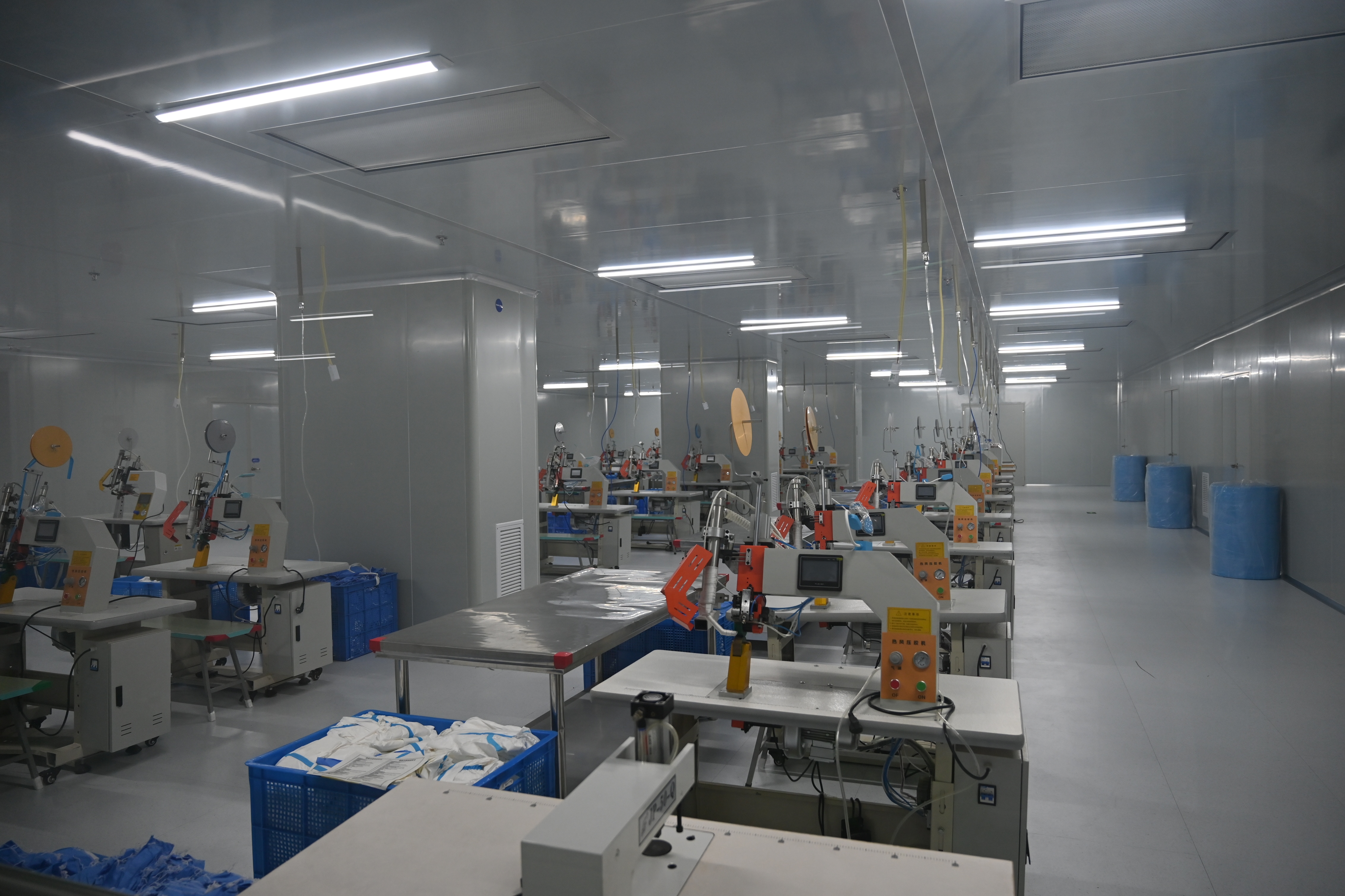
For hospital projects, the relevant parameters are specific. Unicorn holds ISO 9001 and ISO 13485 quality management system certifications, and its products have obtained FSC and CE certification. OEM/ODM production is available with customization of the screen logo and power on/off logo. Monthly capacity is 500 units; lead time is 30–45 days; MOQ is 1 unit; and quality control includes 100% testing. After-sales support is provided remotely.
Case reference: 20 units across hospital anesthesia, emergency, and rescue
A documented deployment with medical institutions, medical device distributors, and hospital groups used 20 Unicorn laryngoscope units across hospital clinical anesthesia, emergency intubation, difficult airway treatment, and rescue operation, over a 5-year period. Reported results include a high intubation success rate, minimal airway tissue injury, and complete operation video recording. The deployment highlights map directly to hospital requirements: HD real-time visualization, disposable blades available, portable battery design, and multi-language UI.
FAQ: Laryngoscope manufacturer for hospitals
What certifications should a laryngoscope manufacturer for hospitals hold?
A hospital-grade laryngoscope supplier should demonstrate ISO 13485 quality management system certification and ISO 9001 certification, and its devices should carry CE and FSC certification. For European market entry, video laryngoscopes must comply with EU MDR 2017/745 and typically require ISO 13485. Jiangsu Unicorn Electronic Technology Co. Ltd. holds ISO 9001 and ISO 13485; its products have obtained FSC and CE certification.
Which laryngoscope models should hospitals consider for anesthesia, ICU, and emergency?
Unicorn offers three models for hospital use. BMS-FA is a rigid reusable video laryngoscope with a 304 stainless steel blade (resolution ≥ 3.72 lp/mm, field of view ≥ 60°, depth of field 20–100 mm, battery ≥ 3400 mAh). BMS-YA has the same performance with a PC plastic blade. BMR is a flexible video laryngoscope (resolution 23.51 LP/mm, field of view > 80°, depth of field 5–100 mm, TPU/PPSU). They are applicable to anesthesiology and respiratory medicine in operating rooms, emergency wards, ICUs, and pre-hospital first-aid vehicles.
Can hospitals or distributors get OEM/ODM laryngoscope customization?
Yes. Unicorn supports OEM/ODM production of laryngoscopes with customization of the screen logo and power on/off logo. Monthly capacity is 500 units, lead time is 30–45 days, MOQ is 1 unit, and every unit receives a 100% test before shipment. This makes branded hospital-group tenders and distributor programs feasible.
How much does a reusable video laryngoscope cost?
According to Grand View Research, which cites Medtronic, reusable video laryngoscopes generally cost from USD 1,000 to USD 8,000, while traditional single-use laryngoscopes cost approximately USD 18. Reusable video laryngoscopes held the largest revenue share of 77.68% in 2024. For project-specific pricing, request a quotation from the manufacturer; the 2026 Unicorn Product Catalog lists the current model range.
What is Unicorn's MOQ and lead time for hospital laryngoscope projects?
Unicorn's MOQ is 1 unit, making evaluation samples practical. Monthly production capacity is 500 units and typical lead time is 30–45 days. Quality control includes 100% testing, and after-sales support is provided remotely. These parameters support pilot orders before larger centralized tenders.
How can a hospital or distributor request a laryngoscope sample or quote?
Contact Unicorn's international sales team directly — Alice Gong, email gongting@unicornchina.top, phone/WhatsApp +86 17512677733. Include your department mix (anesthesia, ICU, emergency, respiratory), the number of intubation sites, and estimated quantity, and the team will match BMS-FA, BMS-YA, or BMR to the project. The 2026 Unicorn Product Catalog is available for download from the supplier.
Conclusion
Hospital laryngoscope procurement is a scenario-fit decision. Unicorn's BMS-FA and BMS-YA cover rigid reusable video laryngoscopy, while the BMR covers flexible video laryngoscopy for difficult airways. The family is manufactured under ISO 9001 and ISO 13485, carries CE and FSC certification, and has documented deployment in hospital anesthesia, emergency, difficult airway, and rescue applications. To evaluate fit for your hospital, request a sample or quotation from Unicorn's sales team.
Request the 2026 Unicorn Product Catalog or a laryngoscope quotation
Jiangsu Unicorn Electronic Technology Co. Ltd. — National High-tech Enterprise | Website: www.unicornendoscope.com | Contact: www.unicornchina.top
Alice Gong — +86 17512677733 | gongting@unicornchina.top | WhatsApp +86 17512677733
Download catalog: Unicorn Product Catalog (2026)
Have Questions or Need More Details?
Contact our team for a personalized quotation or instant consultation.
Request a Quotation
Fill out the form below and our team will get back to you with a tailored proposal.
WhatsApp Direct Chat
Prefer to chat in real-time? Message us on WhatsApp for instant assistance & quick answers.
- Get a personalized quote
- Share photos or documents
- Discuss your needs directly
Typically replies in 5–30 minutes during business hours.