
Laryngoscope Selection Starts With Clinical Context, Not Just Specs
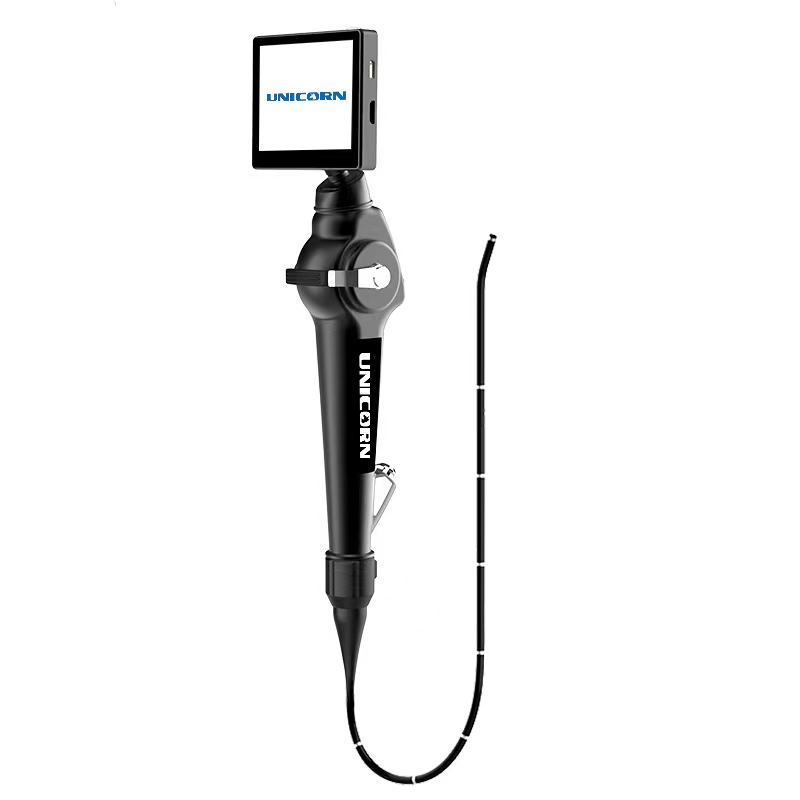
A laryngoscope is a core airway management device used to visualize the larynx during endotracheal intubation. When buyers first compare laryngoscope suppliers, the useful first step is not to isolate the highest resolution or the lowest unit price. It is to define which clinical settings the device must support, which blade or flexible configuration fits the procedure, and which quality system documentation is required for procurement. This article explains laryngoscope categories, the specifications that matter in anesthesia, ICU, and emergency use, and how Unicorn’s laryngoscope models map to common hospital purchasing scenarios.
Why a Generic Laryngoscope Search Is a Risky Procurement Approach
Hospital and clinic buyers often face a mix of laryngoscope types: rigid video laryngoscopes, flexible video laryngoscopes, reusable configurations, and disposable blade systems. If the buying process starts from a generic product name, the result can be a device that does not meet the clinical workflow, blade material preference, or compliance file required by the hospital tender.
For example, an anesthesia department upgrading intubation equipment may prioritize a video laryngoscope with a stainless steel blade for repeated disinfection. An ICU or pre-hospital team may prefer a portable battery-powered device with a screen that can be used in bedside and emergency conditions. A respiratory medicine unit may require a flexible laryngoscope for different airway visualization tasks. These are not interchangeable requirements, and they shape the comparison table far more than a single headline specification.
Laryngoscope Market Context and Why Video Systems Are Expanding
Third-party market data shows the global video laryngoscope market was estimated at USD 784.66 million in 2024 and is projected to reach USD 2.80 billion by 2033, according to Grand View Research. Within that market, the reusable video laryngoscope segment held the largest revenue share of 77.68% in 2024. The rigid video laryngoscope segment dominated the product market with a 60.42% revenue share in 2024. North America held a revenue share of 37.77% in 2024.
These figures are useful for buyer orientation, but they should not replace clinical and regulatory screening. A growing market means more supplier choices and more variation in blade materials, battery capacity, imaging specifications, and certification evidence. The buyer’s job is to separate visible product claims from documentation that can be verified against standards such as ISO 13485.
Unicorn Laryngoscope Models and Their Clinical Fit
Jiangsu Unicorn Electronic Technology Co. Ltd., established in 2020, is a National High-tech Enterprise integrating design, R&D, manufacturing, and trade. The company employs approximately 50–100 staff and operates a manufacturing facility covering 40,000 square meters. Its main products include endoscopy systems, disposable ureteroscopes, visual flexible laryngoscopes, bronchoscopy workstations, medical image processors, and video laryngoscopes. The facility includes modern workshops for 3D printing, CNC precision manufacturing, injection molding, and sterile production environments. The R&D centers include BSL-1 and BSL-2 facilities with equipment investments exceeding 160 million RMB, supported by a team of over 20 engineers. The company holds ISO9001 and ISO13485 quality management system certifications, and has obtained FSC and CE certification for its medical devices. Annual production capacity reaches 12,000 units.
In the laryngoscope range, Unicorn offers three models relevant to anesthesia and respiratory medicine: the BMS-FA video laryngoscope, the BMS-YA video laryngoscope, and the BMR video flexible laryngoscope.
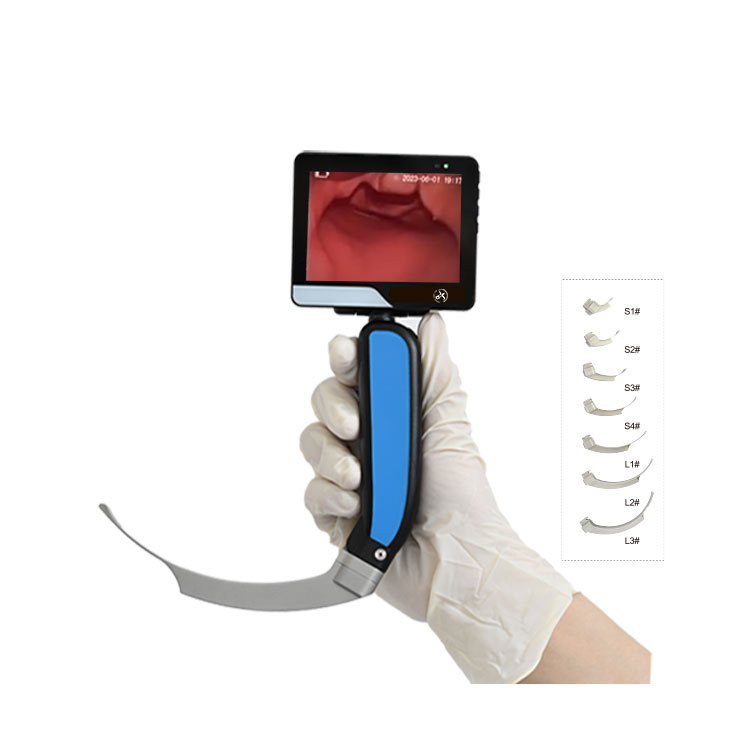
BMS-FA Video Laryngoscope
BMS-FA is designed for anesthesiology and respiratory medicine. The blade is made of 304 stainless steel, and the handle is made of aluminium alloy. Power is supplied by a DC 3.7 V battery with capacity ≥3400 mAh. Optical specifications include resolution ≥3.72 lp/mm, field of view ≥60°, and observation depth of field 20–100 mm.
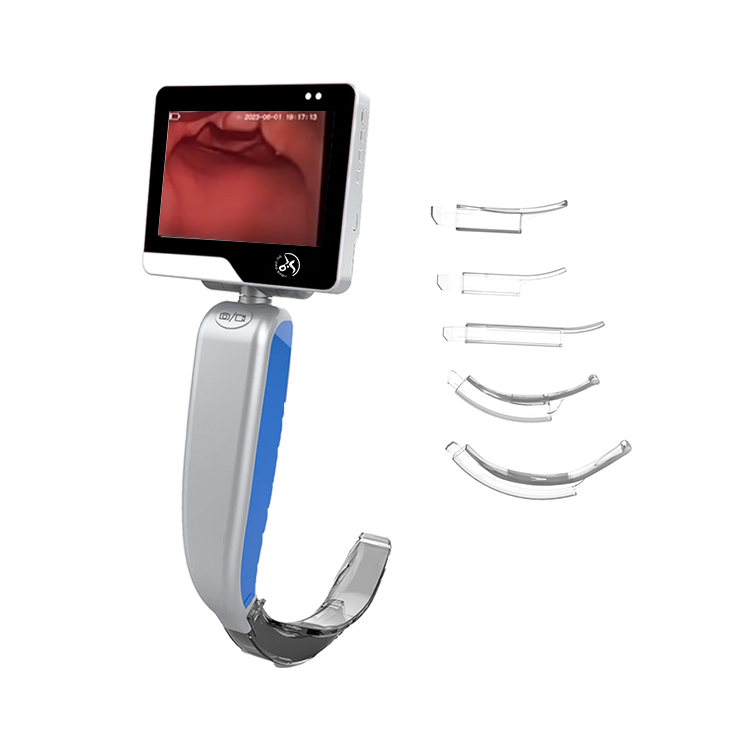
BMS-YA Video Laryngoscope
BMS-YA operates on a DC 3.7 V power supply and has a resolution of at least 3.72 lp/mm. Its handle is made of aluminium alloy, and the blade is made of PC plastic. The field of view is ≥60°, the observation depth of field is 20–100 mm, and the battery capacity is 3400 mAh or above. It is intended for anesthesiology and respiratory medicine.
BMR Video Flexible Laryngoscope
The BMR video flexible laryngoscope is designed for anesthesia and respiratory medicine. It is made of TPU/PPSU material. The resolution is 23.51 LP/mm, field of view >80°, depth of field 5–100 mm, and illuminance >800 Lux.
Step-by-Step: How to Move From Clinical Need to Supplier Comparison
- Define the clinical setting. Confirm whether the device will be used in the operating room, ICU, emergency ward, or pre-hospital first aid vehicle. The provided application scenario for these devices is indoor hospital environments with normal ambient temperature and standard medical disinfection conditions.
- Choose blade or flexible configuration. Compare blade material and rigid vs flexible design. For routine intubation with reusable disinfection workflow, a stainless steel blade may be preferred. For PC plastic or flexible configurations, the selection should follow clinical protocol.
- Read the imaging specifications in context. Field of view, depth of field, resolution, and illuminance matter differently for rigid video laryngoscopes and flexible laryngoscopes. A flexible model such as BMR has a field of view >80° and illuminance >800 Lux, while the BMS-FA and BMS-YA video laryngoscopes specify a resolution ≥3.72 lp/mm and observation depth of field 20–100 mm.
- Verify QMS and regulatory documents. The special requirement for hospital application includes compliance with ISO 13485 medical device quality management system. Medical devices such as video laryngoscopes must comply with EU MDR 2017/745 and typically require ISO 13485 certification for Quality Management Systems.
- Review supporting equipment compatibility. Procurement should consider disposable laryngoscope blades, reusable blade sleeves, power adapter, charging dock, spare battery, data export USB flash drive, medical cart bracket, and external medical monitor compatibility.
- Request documentation before shortlisting. Ask for product specifications, certification evidence, and product catalog before clinical evaluation or tender submission.
Common Hospital Procurement Use Cases
These laryngoscope models are suitable for hospital equipment procurement, clinical anesthesia equipment upgrade, and emergency medical system construction projects. They are applied in batch tendering for medical device centralized purchasing projects. The product can operate in handheld portable battery-powered mode, enabling real-time high-definition visual laryngeal exposure guidance and accurate endotracheal intubation assistance.
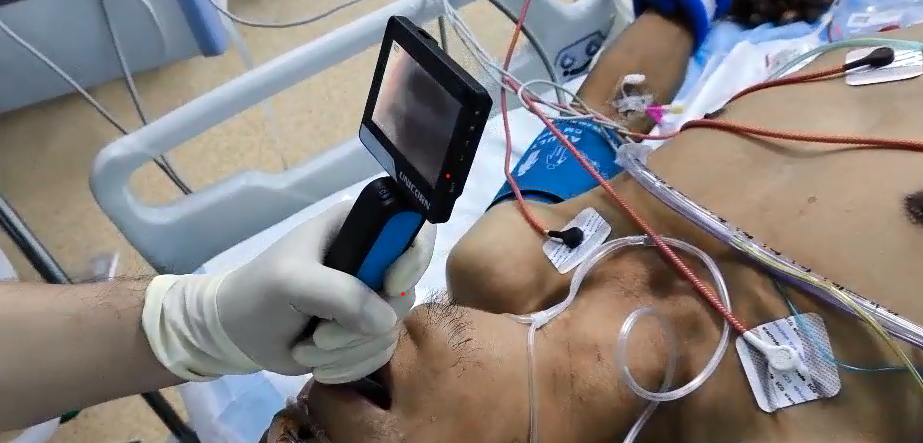
Typical deployment settings include respiratory departments and anesthesia departments in hospitals. Supporting equipment such as disposable laryngoscope blades and reusable blade sleeves are part of the clinical consumables workflow.
Comparison Table: Three Unicorn Laryngoscope Models
| Model | Type | Blade/Material | Resolution | Field of View | Depth of Field | Power | Intended Use |
|---|---|---|---|---|---|---|---|
| BMS-FA | Video Laryngoscope | 304 stainless steel blade; aluminium alloy handle | ≥3.72 lp/mm | ≥60° | 20–100 mm | DC 3.7 V; ≥3400 mAh | Anesthesiology, respiratory medicine |
| BMS-YA | Video Laryngoscope | PC plastic blade; aluminium alloy handle | ≥3.72 lp/mm | ≥60° | 20–100 mm | DC 3.7 V; ≥3400 mAh | Anesthesiology, respiratory medicine |
| BMR | Video Flexible Laryngoscope | TPU/PPSU | 23.51 LP/mm | >80° | 5–100 mm | N/A | Anesthesiology, respiratory medicine |
This table is based only on Unicorn product specifications provided for the three models. Buyers should validate the exact scope of supply and consumables with the supplier.
Frequently Asked Questions
What should buyers check first when comparing laryngoscope suppliers?
Start with the clinical setting and the required laryngoscope configuration. The devices covered here are used in hospital respiratory and anesthesia departments, operating rooms, ICU, emergency wards, and pre-hospital first aid vehicles. They operate in indoor hospital environments with normal ambient temperature and standard medical disinfection conditions. That clinical context determines whether a rigid video laryngoscope, a flexible video laryngoscope, or a specific blade material is appropriate.
What certifications and quality management standards should a laryngoscope supplier provide?
For hospital application, the stated special requirement is compliance with ISO 13485 medical device quality management system. The supplier states that Jiangsu Unicorn Electronic Technology Co. Ltd. holds ISO9001 and ISO13485 quality management system certifications and has obtained FSC and CE certification for its medical devices. In the EU, medical devices such as video laryngoscopes must comply with EU MDR 2017/745 and typically require ISO 13485 certification for QMS.
What technical specifications matter for anesthesia and ICU video laryngoscopes?
For the BMS-FA and BMS-YA video laryngoscopes, the specified resolution is ≥3.72 lp/mm, field of view ≥60°, observation depth of field 20–100 mm, DC 3.7 V power supply, and battery capacity 3400 mAh or above. The BMR video flexible laryngoscope has a resolution of 23.51 LP/mm, field of view >80°, depth of field 5–100 mm, and illuminance >800 Lux. Buyers should compare these values against the intended clinical workflow rather than treating any single specification as the only decision point.
What supporting equipment and consumables should be planned for laryngoscope procurement?
Procurement planning should include disposable laryngoscope blades, reusable blade sleeves, and a power adapter. Depending on the configuration, additional supporting equipment may include a charging dock, high-capacity spare battery, data export USB flash drive, medical cart bracket, and external medical monitor.
How can a buyer request product documentation or evaluate the Unicorn laryngoscope range?
You can start with the official product catalog to review the Unicorn laryngoscope and endoscopy range. For sample, quote, or inquiry discussions, contact Jiangsu Unicorn Electronic Technology Co. Ltd. through the published contact channels. A product catalog is available at Unicorn Product Catalog (2026).
Conclusion: Match the Laryngoscope to the Procedure Before Comparing Suppliers
Laryngoscope procurement is not a single-spec decision. The right comparison starts with clinical location, blade or flexible configuration, imaging requirements, battery and workflow needs, and the quality system documentation accepted by the hospital. Buyers who define these criteria first are better positioned to evaluate video laryngoscope options and to ask suppliers for the evidence that matters.
Jiangsu Unicorn Electronic Technology Co. Ltd. supports this evaluation with three laryngoscope models — BMS-FA, BMS-YA, and BMR — within a broader medical visualization product range. The company’s manufacturing facility, R&D resources, and ISO13485/CE certification documentation provide a basis for further tender and clinical evaluation.
For detailed specifications, configuration options, or quotation requests, review the Unicorn Product Catalog (2026) or contact the company through its official website.
Have Questions or Need More Details?
Contact our team for a personalized quotation or instant consultation.
Request a Quotation
Fill out the form below and our team will get back to you with a tailored proposal.
WhatsApp Direct Chat
Prefer to chat in real-time? Message us on WhatsApp for instant assistance & quick answers.
- Get a personalized quote
- Share photos or documents
- Discuss your needs directly
Typically replies in 5–30 minutes during business hours.