
Which Video Laryngoscope Fits Which Hospital Setting? OR, ICU, Emergency and Difficult-Airway Scenarios
Which Video Laryngoscope Fits Which Hospital Setting? OR, ICU, Emergency and Difficult-Airway Scenarios
Hospitals evaluating airway equipment usually ask whether they need a video laryngoscope or a conventional laryngoscope. A more useful procurement question is where the laryngoscope will be used and which clinical workflow it must support. A device selected for planned anesthesia in an operating room may not be the best choice for an ICU bedside emergency, an emergency ward trauma call, or a pre-hospital first aid vehicle. This scenario-oriented guide explains how hospitals can match laryngoscope configurations to OR, ICU, emergency, respiratory medicine, and difficult-airway needs, using Jiangsu Unicorn Electronic Technology Co., Ltd. and its BMS-FA, BMS-YA, and BMR models as a concrete product example.
Problem Definition: Airway Management Is Not a Single Workflow
Hospital airway management does not happen in one predictable location. Anesthesia staff in an operating room may have time for positioning, planning, and video review. ICU teams often perform urgent bedside intubation on patients who cannot be safely moved. Emergency teams may deal with trauma, cardiac arrest, or rapid-sequence induction in crowded treatment bays. Pre-hospital personnel may need to intubate inside a moving ambulance or at the scene, where space and power are limited.
Across these settings, the clinical requirement remains consistent: real-time high-definition visual laryngeal exposure guidance and accurate endotracheal intubation assistance. The goal is to reduce intubation failure and laryngeal tissue injury while supporting difficult airway intubation. The equipment selection task is to find a laryngoscope configuration that fits the point of care, the patient condition, and the hospital's reusable or disposable workflow preference.
Industry Background: Video-First Laryngoscope Planning Is Becoming the Norm
Market data explains why hospital buyers are moving toward video-based systems. According to Grand View Research, the global video laryngoscope market was estimated at USD 784.66 million in 2024 and is projected to reach USD 2.80 billion by 2033. The same analysis reported that rigid video laryngoscopes held the largest product segment with a 60.42% revenue share in 2024, while reusable video laryngoscopes accounted for the largest usability segment at 77.68%.
From a hospital procurement perspective, these figures indicate that reusable rigid video systems are already a mainstream anesthesia and emergency tool. They do not replace the need for flexible visualization in every scenario; rather, hospitals often need to compare reusable rigid video laryngoscopes with video flexible laryngoscopes when building a complete airway kit.
Detailed Solution: Building a Scenario-Driven Laryngoscope Portfolio
Jiangsu Unicorn Electronic Technology Co., Ltd., referred to here as Unicorn, is a National High-tech Enterprise that designs, researches, manufactures, and sells medical visualization devices. Founded in 2020, the company operates modern workshops covering more than 40,000 square meters, employs more than 20 R&D engineers, and reports an annual output of 12,000 units. Unicorn's product scope includes endoscopy systems, disposable ureteroscopes, visual flexible laryngoscopes, bronchoscopy workstations, medical image processors, and video laryngoscopes. The company states that it has obtained FSC and CE certification as well as ISO9001 and ISO13485 quality management system certification.
For hospital settings, Unicorn's portfolio includes three documented video laryngoscope configurations: BMS-FA, BMS-YA, and BMR. Each configuration offers different material and optical characteristics, so scenario fit matters more than looking at brand names alone.
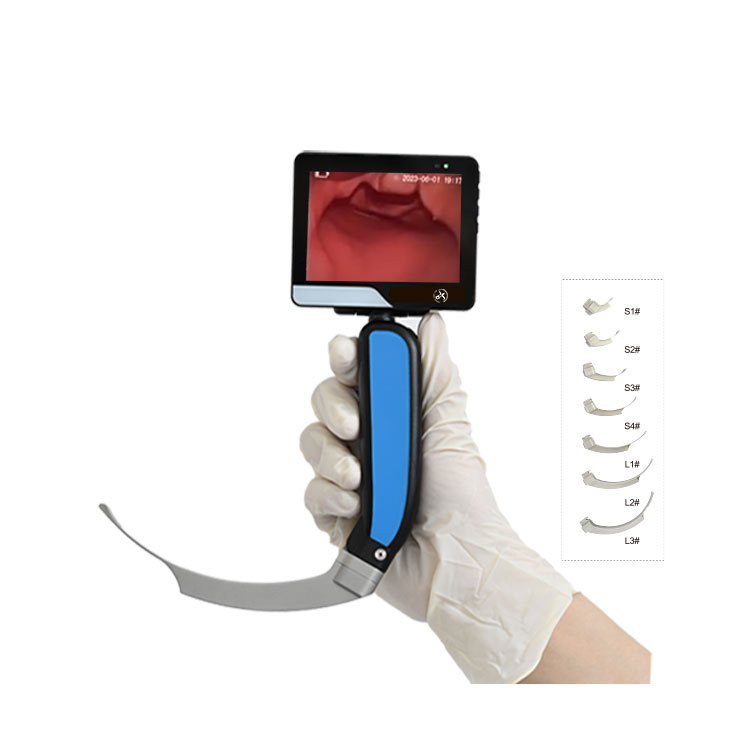
OR and Anesthesia: A Rigid Video Laryngoscope with a Defined Blade and Recording Function
Anesthesia and respiratory medicine are the documented applicable departments for Unicorn's video laryngoscope line. In an operating room, the clinical need is to see the laryngeal opening clearly, guide the endotracheal tube accurately, and reduce tissue damage during laryngoscopy. Video recording is a practical advantage for teaching, documentation, and difficult-airway review.
The Unicorn BMS-FA is a video laryngoscope whose documented specifications include a resolution of at least 3.72 lp/mm, a field of view of at least 60 degrees, and an observation depth of field of 20 to 100 mm. Its blade material is 304 stainless steel. The handle is aluminum alloy, the power supply is DC 3.7 V, and the battery capacity is 3400 mAh or above. For anesthesia teams that prefer a reusable metallic blade, BMS-FA gives purchasing teams a clear specification set to evaluate.
ICU: A Bedside Laryngoscope with Portable Power and Accessory Planning
ICUs are named in Unicorn's application documentation as a common location for these devices. The ICU laryngoscope must work at the bedside, often under time pressure, with limited room for large equipment. The documented operating mode for Unicorn's system includes handheld portable battery-powered use, a built-in screen, and support for image snapshot and video storage. A high-capacity spare battery, power adapter, charging dock, and data export USB flash drive are also documented as part of the accessory set.
Because battery capacity is documented at 3400 mAh or above for BMS-FA and BMS-YA, hospital teams can evaluate whether a single charge is appropriate for a full ICU shift or whether backup batteries should be part of the procurement package.
Emergency and Pre-Hospital Care: Portable Deployment in Tight Spaces
Emergency wards and pre-hospital first aid vehicles are among the named deployment points in the Unicorn application scenario. An emergency laryngoscope should be easy to move between a treatment bay and an ambulance, and it must start quickly when an airway emergency begins. The documented Unicorn system includes a portable battery design and optional accessories such as a medical cart bracket if the same laryngoscope needs to be fixed at a bedside station.
For hospitals designing an emergency airway cart, the key selection inputs are the display, the laryngoscope blade path, and the power management system. These factors determine whether the device can be used reliably in the emergency department and during patient transport.
Respiratory and Difficult Airway: When a Flexible Video Laryngoscope May Be Needed
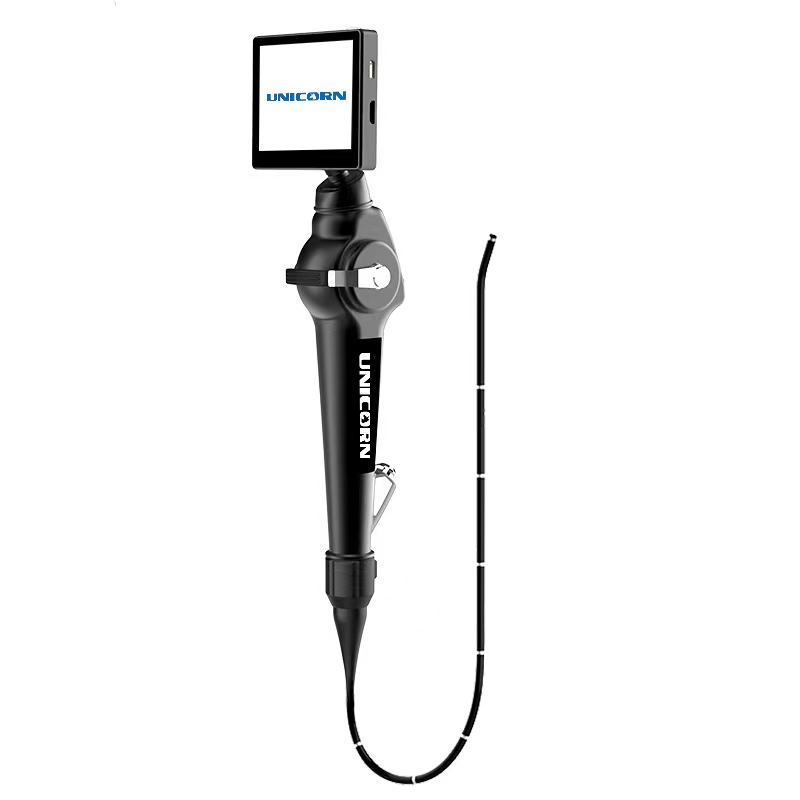
For respiratory medicine and difficult-airway scenarios, a flexible intubation tool can be a necessary addition. Unicorn's BMR is classified as a Video Flexible Laryngoscope and is documented for use in anesthesiology and respiratory medicine. Its optical specifications include a resolution of 23.51 LP/mm, a field of view greater than 80 degrees, a depth of field of 5 to 100 mm, and an illuminance of more than 800 Lux. The documented material field for BMR is TPU/PPSU.
Although flexible and rigid video laryngoscopes are not interchangeable in every procedure, many hospital groups include both categories in their product comparison for airway management. A video flexible laryngoscope adds a different insertion path and is most relevant when the clinical plan calls for flexible laryngoscopy rather than a standard rigid blade approach.
Step-by-Step Breakdown: Matching Laryngoscope Procurement to Clinical Workflows
Hospitals do not need to standardize every airway device as one identical laryngoscope. The following six-step process can help procurement teams translate clinical workflows into a practical supplier requirement.
- Map the care settings first. Identify whether the device will be used in hospital operating rooms, emergency wards, ICUs, pre-hospital first aid vehicles, or multiple locations. Unicorn's application documentation names all these settings as relevant deployment environments.
- Choose the basic product category. Decide whether the workflow requires a reusable video laryngoscope with a rigid blade, a video flexible laryngoscope, or a mixed fleet. The reusable video laryngoscope segment is dominant in the current market, but respiratory and difficult-airway workflows may create a separate need for flexible visualization.
- Compare documented optical and imaging specifications. For Unicorn's BMS-FA and BMS-YA video laryngoscopes, documented specifications include resolution of at least 3.72 lp/mm, field of view of at least 60 degrees, and an observation depth of field of 20 to 100 mm. For BMR, the documented resolution is 23.51 LP/mm, the field of view is greater than 80 degrees, and the depth of field is 5 to 100 mm.
- Review materials and reprocessing workflow. BMS-FA uses a 304 stainless steel laryngoscope blade, BMS-YA uses a PC plastic laryngoscope blade, and BMR has a TPU/PPSU material designation. The supporting accessory list mentions disposable laryngoscope blades and reusable blade sleeves, which allows hospitals to prepare for both reusable and disposable clinical pathways.
- Check bedside and power accessories. The broader application scenario includes a power adapter, charging dock, high-capacity spare battery, data export USB flash drive, medical cart bracket, and connection to an external medical monitor. Battery capacity for BMS-FA and BMS-YA is 3400 mAh or above, with a DC 3.7 V power supply.
- Evaluate the manufacturer as a quality system, not only as a product name. In CE-regulated regions, medical devices such as video laryngoscopes must comply with EU MDR 2017/745 and typically require ISO 13485 quality management system certification. Unicorn states that it holds FSC and CE certification and ISO9001 and ISO13485 quality management system certification. An ISO 13485 laryngoscope supplier should also be able to demonstrate production control and after-sales support.
Use Case Evidence: A 20-Unit Hospital and Distributor Deployment
Unicorn reports a multi-scenario deployment of 20 units involving medical institutions, a medical device distributor, and a hospital group. The application profile covered hospital clinical anesthesia, emergency intubation, difficult airway treatment, and rescue operations. The documented period of use is five years. Reported outcomes include a high intubation success rate, minimal airway tissue injury, and complete operation video recording. The documented highlights of the deployment include HD real-time visualization, available disposable laryngoscope blades, portable battery design, and multi-language UI.
This use case is useful for hospital buyers because it connects the product specification to the actual workplace: anesthesia staff, emergency responders, and difficult-airway teams can all rely on the same video laryngoscope family when the configuration matches the intended setting.
Comparison Table: BMS-FA, BMS-YA and BMR Video Laryngoscope Specifications
The table below compiles documented specification data from Unicorn's product information. It is meant as a factual comparison for hospital evaluation, not as a ranking of one model over another.
| Attribute | Video Laryngoscope BMS-FA | Video Laryngoscope BMS-YA | Video Flexible Laryngoscope BMR |
|---|---|---|---|
| Product family | Video Laryngoscope | Video Laryngoscope | Video Flexible Laryngoscope |
| Documented applicable departments | Anesthesiology, Respiratory Medicine | Anesthesiology, Respiratory Medicine | Anesthesiology, Respiratory Medicine |
| Resolution | ≥ 3.72 lp/mm | ≥ 3.72 lp/mm | 23.51 LP/mm |
| Field of view | ≥ 60 degrees | ≥ 60 degrees | > 80 degrees |
| Depth of field | 20–100 mm | 20–100 mm | 5–100 mm |
| Illuminance | Not specified in the product card | Not specified in the product card | > 800 Lux |
| Power supply voltage | DC 3.7 V | DC 3.7 V | Not specified in the product card |
| Battery capacity | 3400 mAh or above | 3400 mAh or above | Not specified in the product card |
| Handle material | Aluminum alloy | Aluminum alloy | Not specified in the product card |
| Blade or insertion material | 304 stainless steel blade | PC plastic laryngoscope blade | TPU/PPSU material |
Decision Checklist for Hospital Laryngoscope Manufacturers
Hospital purchasing managers often need a short checklist before they send an inquiry to a laryngoscope manufacturer. The following points are directly connected to the documented facts in this article:
- Confirm that the laryngoscope functions include real-time high-definition visual laryngeal exposure guidance and accurate endotracheal intubation assistance.
- Confirm that the device is designed for OR, ICU, emergency, and pre-hospital first aid vehicle use if the hospital expects to move the device across departments.
- Check whether the manufacturer can provide both reusable video laryngoscopes and video flexible laryngoscopes to cover routine and difficult-airway workflows.
- Ask whether the supplier supports disposable laryngoscope blades and reusable blade sleeves in its accessory range.
- Require evidence of ISO 13485 quality management system certification and CE marking where applicable.
- Ask about order flexibility. Unicorn's documented OEM/ODM capability includes customization of the screen logo and power on/off logo, with a monthly capacity of 500 units and a lead time of 30 to 45 days.
- Check minimum order requirements. Unicorn lists a documented MOQ of 1 unit, which allows a hospital or distributor to test a configuration before committing to a larger order.
- Confirm post-shipment support. Unicorn's documented after-sales service includes remote support, and its reported quality control process includes 100% testing.
FAQ: Laryngoscope Manufacturer for Hospitals
What should a hospital look for in a laryngoscope manufacturer for hospitals?
Hospitals should first evaluate whether the manufacturer can meet clinical, regulatory, and supply-chain requirements. Clinically, the laryngoscope should provide real-time high-definition visual laryngeal exposure guidance and accurate endotracheal intubation assistance, because these functions help reduce intubation failure and laryngeal tissue injury while supporting difficult airway intubation. From a hospital deployment perspective, the manufacturer should be able to support operating room, ICU, emergency ward, and portable bedside use. From a compliance perspective, an ISO 13485 laryngoscope manufacturer with CE marking is typically preferred, especially in markets that follow EU MDR 2017/745. From a practical purchasing perspective, hospitals should also check documented specifications, blade material options, disposable laryngoscope blade availability, battery capacity, accessory compatibility, quality control, lead time, MOQ, and after-sales support.
Conclusion
The right video laryngoscope for a hospital is not determined only by the name of the product category. It is determined by the clinical setting, the clinical workflow, the available support equipment, and the manufacturer's quality system. OR anesthesia teams, ICU staff, emergency physicians, and pre-hospital responders all need a clear view of the laryngeal opening, but their practical constraints around portability, blade material, battery power, and recording are not identical.
Unicorn's BMS-FA, BMS-YA, and BMR configurations offer a documented product range that can be evaluated against those departmental differences. The BMS-FA and BMS-YA models represent reusable video laryngoscope configurations with clear specifications, while BMR adds a video flexible laryngoscope path for anesthesia and respiratory medicine.
To review the full product range, download the Unicorn Product Catalog (2026).
Have Questions or Need More Details?
Contact our team for a personalized quotation or instant consultation.
Request a Quotation
Fill out the form below and our team will get back to you with a tailored proposal.
WhatsApp Direct Chat
Prefer to chat in real-time? Message us on WhatsApp for instant assistance & quick answers.
- Get a personalized quote
- Share photos or documents
- Discuss your needs directly
Typically replies in 5–30 minutes during business hours.