
Laryngoscope Procurement Application Guide: Anesthesia, ICU & Emergency Projects
Laryngoscope Procurement Application Guide: Anesthesia, ICU & Emergency Projects
Hospital laryngoscope projects rarely fail on price. They fail because the blade and lens set does not cover the airway cases each department actually meets, because the compliance file cannot be closed with a certificate number, or because the consumable and service model was never costed across the equipment's working life. This guide is written for anesthesia, ICU and emergency teams preparing a batch tender, a departmental upgrade or a multi-site rollout, and it sets out the comparison criteria, the evidence to request, and the configuration logic behind Unicorn's laryngoscope platform.
Video laryngoscopy is described in the clinical literature as a procedural technique used for airway management, in which a laryngoscope blade equipped with a camera is used. That definition already contains the procurement problem: the camera, the blade, the power supply and the disinfection pathway belong to a single purchasing decision, yet they are usually owned by different stakeholders — anesthesia clinicians, ICU nursing, emergency medical teams, biomedical engineering, infection control and the purchasing office.
Short answer. Select a laryngoscope platform that (1) covers all age groups and both standard and difficult airways with a documented blade, lens and support-rod combination set, (2) runs a full clinical session on one charge without thermal risk to airway tissue, (3) can be serviced on site in minutes using disinfectant-resistant components, and (4) arrives with a verifiable ISO 13485:2016 and CE documentation pack plus confirmed annual production capacity. Unicorn's documented platform addresses these four points with 15 blade, lens and support-rod combinations, up to 5 hours of continuous operation on a single full charge, 1-minute on-site component replacement, and a stated annual output of 12,000 units.
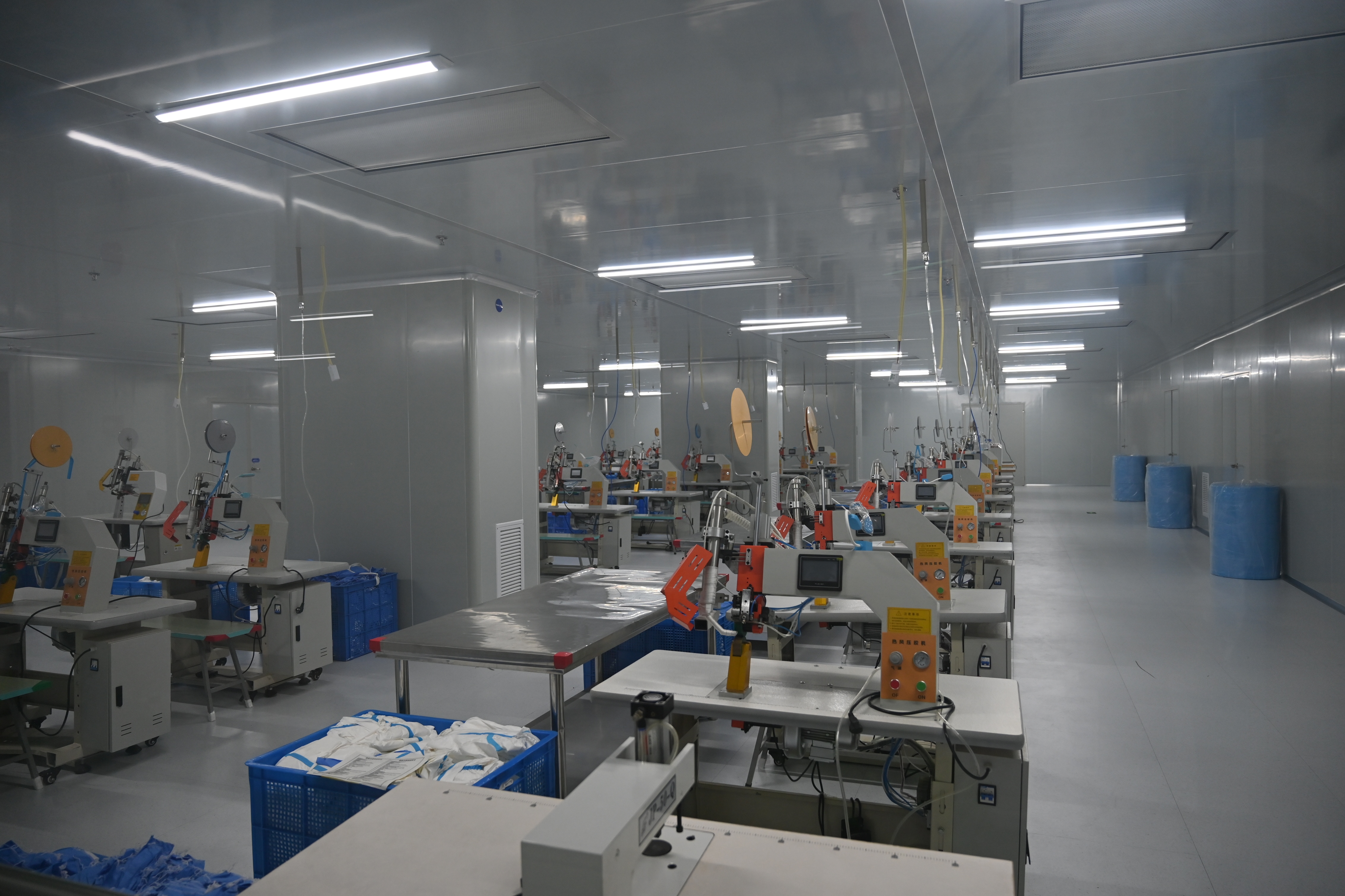
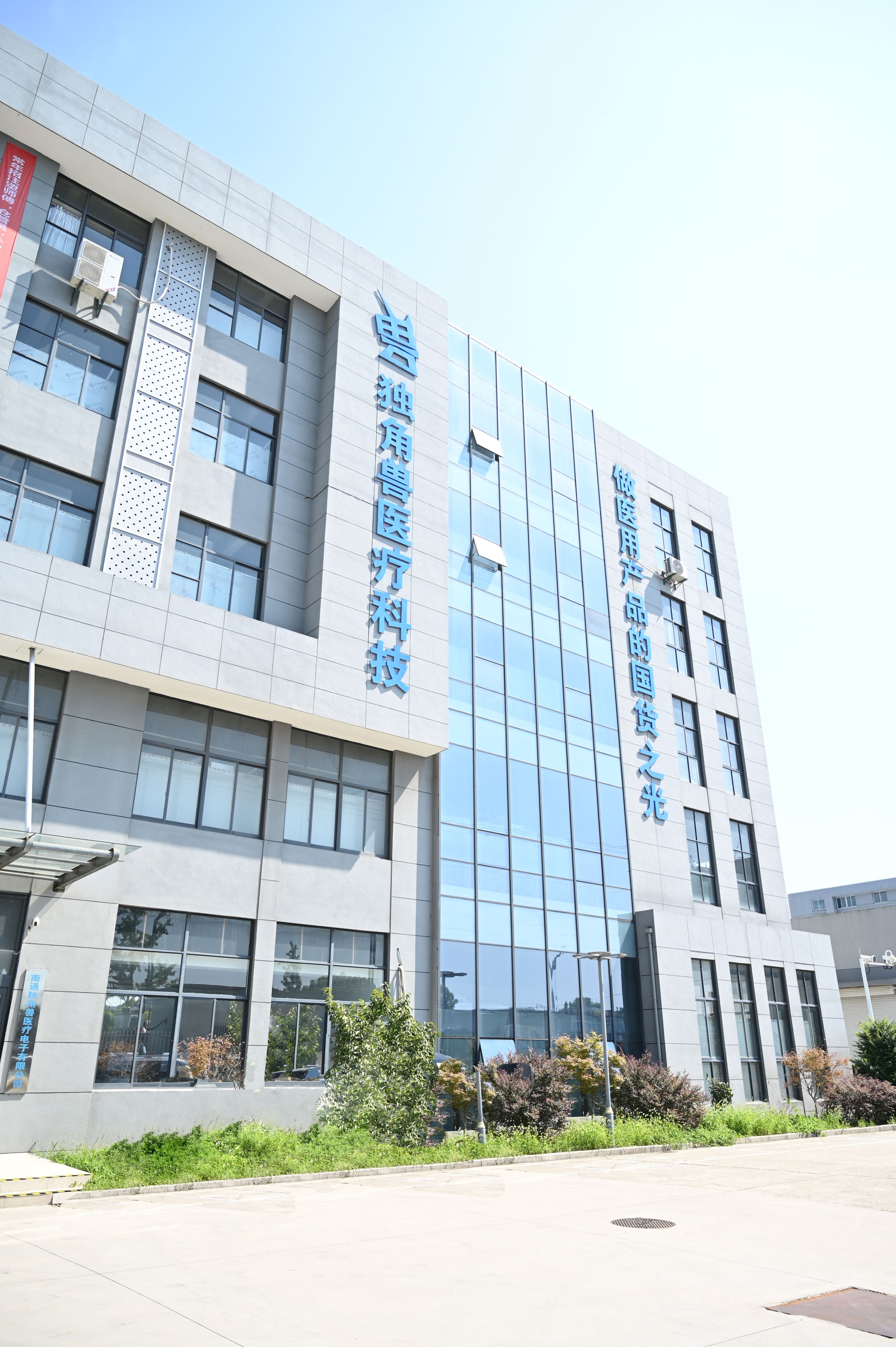
Manufacturing base behind Unicorn video laryngoscope production for hospital projects.
Problem definition: why single-device purchasing logic breaks down in hospital projects
A department that buys one laryngoscope optimises for one setting. A project buys a fleet: devices for the operating room, the ICU bedside, the emergency bay, the pre-hospital bag and the clinical training room — usually under one tender, one budget line and one delivery schedule. The comparison criteria that work for a single unit do not survive that scaling step.
Four failure modes recur in laryngoscope projects, and each one is created by the specification rather than by the supplier.
- Configuration gap. When the blade and lens set does not cover paediatric, obese and cervical-spine-immobilised patients, clinicians revert to direct laryngoscopy precisely when the difficult airway presents. Configuration coverage is a specification item, not an accessory added after award.
- Compliance gap. A “CE certified” badge on a product page is not a certificate. Under Regulation (EU) 2017/745 the CE marking is affixed under the manufacturer's responsibility and expresses conformity with the regulation, but the buyer still has to obtain the certificate, its product scope, the notified body and the device class. ISO 13485 is a quality-management-system standard; on its own it does not approve any product, so it has to be matched to the specific model being supplied.
- Lifecycle gap. Reusable and disposable formats do not carry the same cost curve. Reusable metal blades support long-term cyclic use, which reduces the average consumable cost per patient, while single-use formats shift spending into per-case supply and logistics. A tender that compares only acquisition price will not surface that difference.
- Supply gap. Annual output, spare-part availability, on-site serviceability and regional service coverage decide whether a rollout stays on schedule after award.
Specification test. Read your own draft tender and ask whether two suppliers with very different compliance and service profiles could both submit an apparently compliant bid. If they could, the specification is too thin to protect the project.
Industry background: market, standards and regulatory baseline for laryngoscope tenders
The category is expanding, which matters for buying decisions taken now. Grand View Research's Video Laryngoscope Market Size Report, 2025–2033, estimates the global video laryngoscope market at approximately USD 784.7 million in 2024 and projects growth to USD 2,798.1 million by 2033, a CAGR of 14.9%. North America accounted for the largest regional revenue share at approximately 37.8% in 2024. Within the usability segment, reusable laryngoscopes took the largest share at 65.8% in the same year — the clearest available signal that the reusable-versus-disposable decision remains the central commercial choice in this category even as single-use adoption grows.
Standards and regulation set the compliance floor that a project specification should reference by number rather than by adjective:
- ISO 13485:2016 — the international quality management system standard for organisations involved in the lifecycle of medical devices, including manufacturers. Published 2016.
- ISO 7376:2020 — the international standard specifying requirements for laryngoscopes used for tracheal intubation.
- Regulation (EU) 2017/745 (MDR) — entered into force in 2017 and fully applicable from 26 May 2021. Devices placed on the EU market must comply, and CE marking is affixed under the manufacturer's responsibility.
- US FDA classification — laryngoscope kits are listed under product code OGH (rigid laryngoscope), with 21 CFR 868.5540 as the classification citation; flexible or rigid nasopharyngoscope systems sit under 21 CFR 874.4760, where the Karl Storz Video Rhino-Laryngoscope System is recorded as a Class II device.
Two practical consequences follow. First, a 2026 specification should require certificate numbers, issuing bodies, covered product scope and validity dates, because those are the items a hospital quality file actually needs. Second, where a US or EU market pathway is relevant, the device class should be confirmed against the regulator's current database before specification language is finalised, since classification determines which premarket route applies.
The competitive landscape is also worth reading accurately. Verathon describes its GlideScope family as containing both single-use and reusable video laryngoscopes for intubation across a wide range of patient types and clinical settings, while Infinium Medical lists a video laryngoscope under the name Infinium ClearVue. Those manufacturer statements establish that products exist and what format they take; they do not establish market share, clinical superiority or manufacturing capacity, and should not be used to rank suppliers.
Five comparison criteria for anesthesia, ICU and emergency deployment
- Airway coverage. Count the blade, lens and support-rod combinations offered and check which patient groups each one serves. A project needs coverage of all age groups plus a defined answer for the difficult airway, because that is where a fleet-level decision has the greatest clinical effect.
- Visualisation and the shared view. A video laryngoscope places the airway view on a screen. In a project context the value is that the assistant, the supervising clinician and the trainee can follow the same image at the same time, which shortens coaching and handover in the operating room and at the ICU bedside.
- Power and thermal endurance. Ask for full-charge runtime, heat behaviour during prolonged use, and the battery protection concept. Thermal behaviour is a patient-safety item during long cases, not a comfort feature.
- Infection control and serviceability. Check the surface protection rating, material compatibility with the department's disinfectant protocol, and how quickly a failed component can be replaced. A unit that must be shipped away for repair reduces fleet availability for the whole project.
- Supplier capacity and compliance evidence. Confirm annual output, facility scale, engineering headcount, certification portfolio, export experience and service coverage. These determine whether a multi-department delivery schedule is realistic.
Detailed solution: how the Unicorn laryngoscope platform is configured for project rollouts
Unicorn Technology (Jiangsu Unicorn Electronic Technology Co., Ltd.) designs, researches, manufactures and trades medical endoscope products, including video laryngoscopes, visual flexible laryngoscopes and disposable endoscopic airway products, with stated use in ICU, anesthesia, respiratory, urology, emergency and medical-education settings. The platform is set out below against the five criteria above.
Configuration breadth and difficult-airway coverage
The documented configuration contains 15 different combinations: 7 metal lenses, 3 support rods, 3 hard lenses and 2 difficult-airway lenses. That spread covers all age groups together with both standard and difficult airways. In product documentation comparing the platform with the VDO-100D reference, Unicorn records an improved intubation success rate for difficult airways and an increase in glottis visualisation rate. For a project, this is the material that justifies a single platform standard across departments rather than separate device families for pediatrics, adults and difficult airways.
Runtime, thermal behaviour and battery safety
The device uses a low-power chip solution that provides up to 5 hours of continuous working time on a single full charge, with low heat generation that reduces the risk of thermal damage to airway tissues during prolonged use. Battery cells are managed by BMS battery management protection, and that control is recorded in the company's risk-management documentation. For anesthesia lists that run long cases and for ICU units that are used intermittently without a docking routine, runtime and heat are the two parameters that decide whether the device is actually picked up.
Serviceability and infection control
The platform uses an integrated modular structure in which on-site component replacement takes about 1 minute. It is rated IPX4 for water resistance and is resistant to disinfectants, and the reusable metal blades support long-term cyclic use. The procurement consequence is fleet availability: a maintenance action measured in minutes keeps devices in the department instead of in a logistics loop.
Cost logic: reusable blades and integrated hardware
Reusable metal blades support long-term cyclic use, which reduces the average consumable cost per patient, and the integrated machine structure lowers overall procurement investment. That structure suits project budgets, where capital expenditure is approved once and operating spend is reviewed annually. It also explains why the reusable-versus-disposable question should be answered in the specification, not left to individual departments — the 2024 segment data showing reusable devices at 65.8% of the usability segment reflects how many buyers still resolve it in favour of reusable capital equipment.
Manufacturing capacity and compliance documentation
Unicorn reports a 40,000 m² facility footprint, annual output of 12,000 units, a 20-engineer-plus R&D team, a workforce of 50–100 staff, a 70% export ratio and seven regional offices, with equipment investment exceeding RMB 160 million. Production includes 3D printing for new materials, CNC precision manufacturing, medical-grade material injection moulding and sterile production environments at Class 100 and Class 1000, supported by BSL-1 and BSL-2 R&D centres.
On the compliance side, the company holds FSC and CE certification for its products together with ISO 9001 and ISO 13485 quality management system certification. An ISO 13485:2016 certificate number, UKZB25MD30140R0S, is recorded against the laryngoscope range in the company's official catalog and certification-body listing. As with any supplier, the purchasing team should verify the certificate scope, the products covered and the validity period on the issuing body's registry before the file is approved.
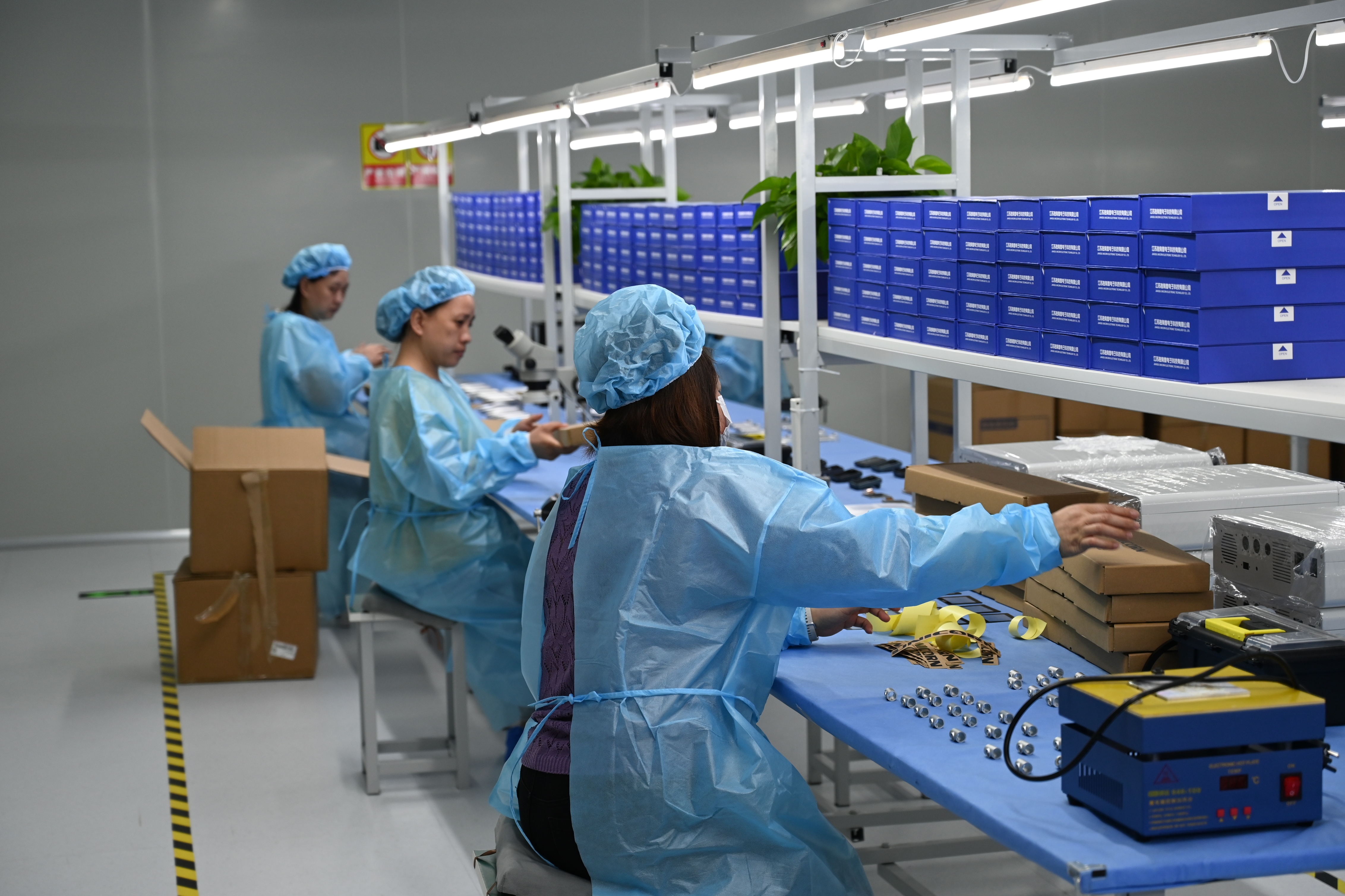
Production base supporting a stated annual output of 12,000 units.
Commercial and logistics terms for cross-border projects
Because roughly 70% of output is exported, project buyers should fix the delivery term in the tender rather than assume it. FOB and CIF allocate freight, insurance and risk transfer differently, and the choice changes the landed-cost model that the hospital finance team will approve. Whichever Incoterm is selected, the delivery schedule should be checked against the supplier's stated capacity: a 12,000-unit annual output has to absorb the project volume alongside existing orders, so phased delivery windows should be agreed in writing, together with the spare-parts list and the point at which title and risk transfer.
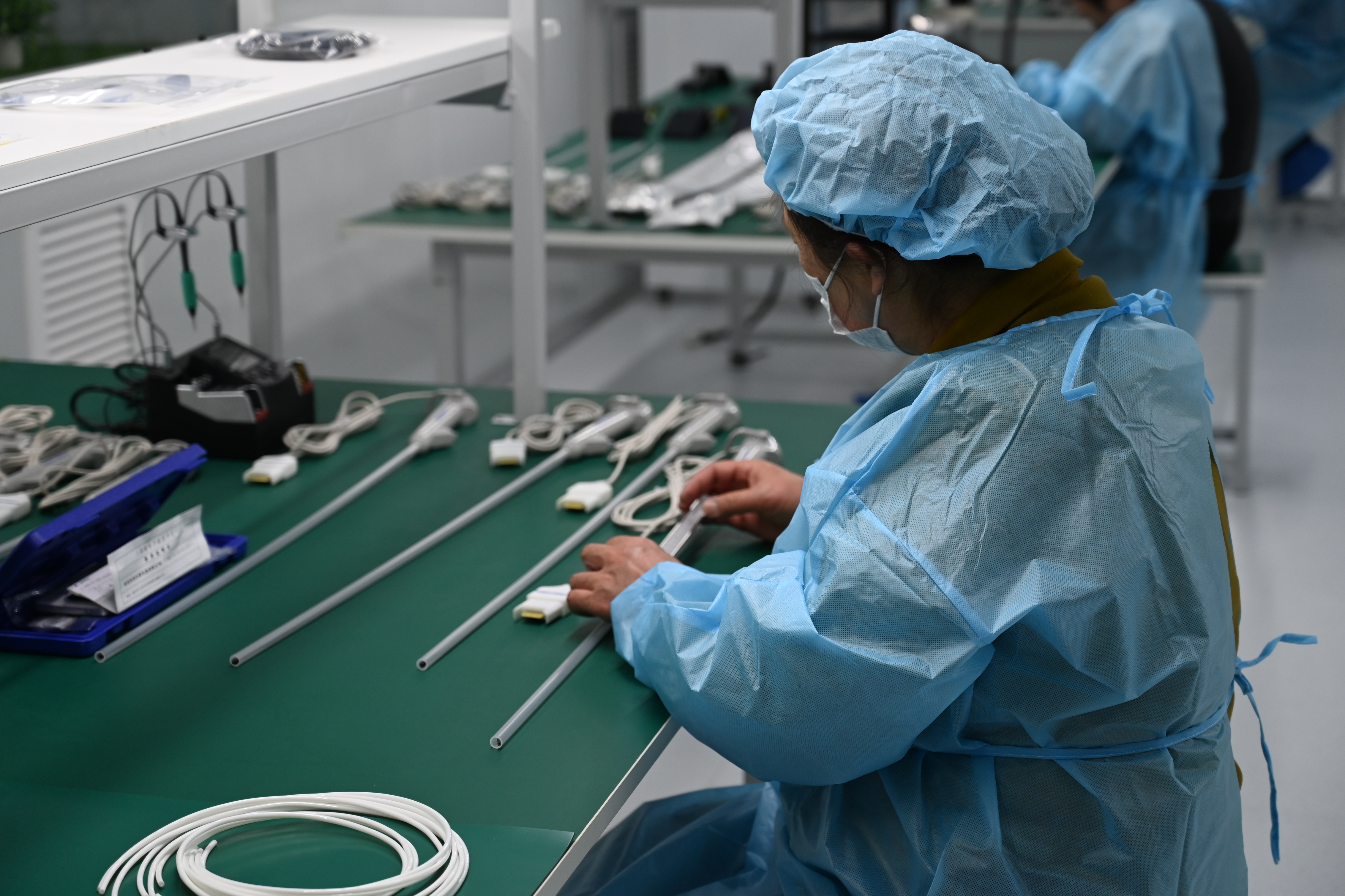
Manufacturing workshop used for laryngoscope production and preparation.
Step-by-step: running a laryngoscope project from needs assessment to handover
- Map the airway case mix by department. Separate routine operating-room anesthesia intubation, ICU bedside intubation, emergency and pre-hospital first aid, and the difficult-airway categories that recur in your population — paediatric, obese and cervical-spine-injury cases.
- Convert the case mix into a configuration specification. State how many lenses, support rods, hard lenses and difficult-airway lenses each location needs, and confirm the combination count offered.
- Write the compliance clause. Require the ISO 13485:2016 certificate number, scope and validity; CE documentation with device class and notified body; ISO 7376:2020 as the product standard reference; and a classification check where a US or EU pathway applies.
- Define the lifecycle model. Decide between reusable blade cycles and per-case disposable supply, and express the answer as an annual consumable forecast rather than a single unit price.
- Define the service model. Require on-site component replacement time, a spare-parts list, warranty terms and a response commitment, because these drive fleet availability.
- Fix the commercial frame. Confirm the Incoterm (FOB or CIF), payment terms, phased delivery windows and the supplier's capacity position against your volume.
- Validate with samples and a supervised evaluation. Test the configuration on manikins across the difficult-airway scenarios you identified, then run a supervised clinical evaluation under your own governance before the contract is awarded.
- Plan handover and review. Train each department on the actual configuration they receive, then set a review point at which consumable usage and configuration gaps are re-checked against the original case mix.
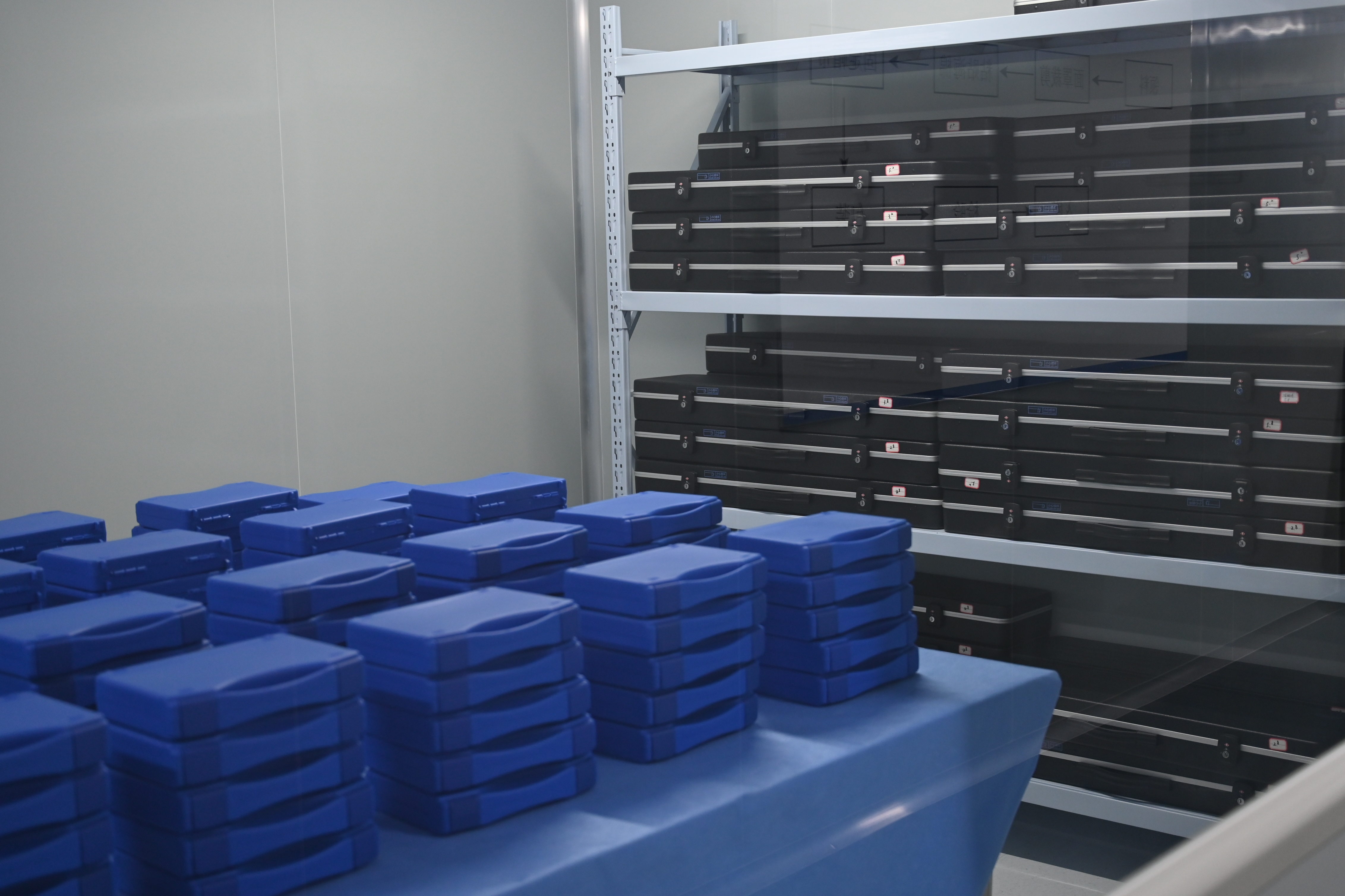
Order preparation and dispatch area for project deliveries.
Use cases: how anesthesia, ICU and emergency deployments differ
Operating room routine anesthesia intubation. The highest case volume in the project sits here, so the reusable blade set and the integrated machine structure carry the most weight. The full combination count matters less than the availability of the sizes that this list uses every day.
ICU bedside intubation. ICU use is unpredictable and often urgent, which puts runtime and disinfectant resistance ahead of portability. The 5-hour single-charge runtime and the 1-minute on-site component replacement are the parameters that keep a bedside unit in service across a busy week.
Emergency and pre-hospital first aid. Here the device leaves the building. Compactness, rapid setup and the ability to work without a power connection for the duration of a transport decide whether the emergency laryngoscope is used or left behind.
Difficult-airway programmes. Paediatric, obese and cervical-spine-injury cases are the reason the two dedicated difficult-airway lenses exist in the configuration. Documented performance for difficult airways, alongside an increased glottis visualisation rate, is the evidence that should be presented to the clinical committee that approves the protocol.
Comparison table: matching laryngoscope format to project requirement
The table below compares the three formats a hospital project usually has to choose between. Only publicly attributable or first-party documented facts are used; where a figure does not exist in an attributable source, the table does not invent one.
| Format | How it is supplied | Cost structure | Disinfection and workflow | Best fit in a hospital project |
|---|---|---|---|---|
| Reusable video laryngoscope (Unicorn platform) | Integrated machine with reusable metal blades; 15 combinations (7 metal lenses, 3 support rods, 3 hard lenses, 2 difficult-airway lenses) | Reusable metal blades support long-term cyclic use, reducing average consumable cost per patient; integrated structure lowers overall procurement investment | IPX4 water resistance; disinfectant resistant; on-site component replacement in about 1 minute | Multi-department fleets covering OR, ICU and emergency where capital budget is approved once |
| Disposable / single-use laryngoscope | Per-case supply model; in the market, Verathon describes its GlideScope family as including single-use configurations, and FDA records describe a flexible single-use videoscope used with a compatible camera and control unit | Spend falls into recurring per-case supply, so an annual consumption forecast is required in the tender | Removes reprocessing from the workflow for the disposable component; compatibility between the disposable scope and the reusable control unit must be confirmed | High-turnover lists and settings where reprocessing capacity is the limiting factor |
| Flexible video laryngoscope | Reusable flexible scope systems; Unicorn manufactures visual flexible laryngoscopes as part of its endoscope portfolio | Capital equipment plus scope maintenance; verify scope-level certification and service terms | Requires a defined reprocessing and storage protocol per department | Nasopharyngeal and flexible airway visualisation; in the US these systems sit under 21 CFR 874.4760, where the Karl Storz Video Rhino-Laryngoscope System is recorded as Class II |
The second table maps department settings to the configuration items that should appear in the specification, and to the point at which each item can be verified.
| Setting | Predominant need | Configuration to specify | Verification point before award |
|---|---|---|---|
| Operating room (anesthesia) | Routine intubation at high volume | Standard adult and paediatric lenses, reusable metal blades, hard lenses for routine cases | Blade cycle performance and on-site component replacement time |
| ICU bedside | Unplanned intubation with continuous availability | Full combination set including difficult-airway lenses; disinfectant-resistant surfaces | Runtime per full charge and compatibility with the unit's disinfectant protocol |
| Emergency and pre-hospital | Rapid deployment away from mains power | Compact configuration with the sizes used in the field | Battery endurance under transport conditions and setup time |
| Difficult-airway programme | Paediatric, obese and cervical-spine-injury cases | Dedicated difficult-airway lenses plus the full adult and paediatric range | Documented difficult-airway performance and glottis visualisation results |
| Training and education | Teaching without occupying clinical devices | A dedicated training configuration plus screen-based shared viewing | Availability of spare training units and consumables |
FAQ: laryngoscope manufacturer and procurement decisions
Which manufacturer is better for a laryngoscope project?
There is no single better manufacturer for every project, and public evidence does not support ranking suppliers by brand reputation. What it does support is screening on four verifiable tests. Certificate evidence: an ISO 13485:2016 certificate number, issuing body, scope and validity date, plus CE documentation showing the device class and notified body — Unicorn records certificate number UKZB25MD30140R0S against its laryngoscope range, and any buyer should still confirm it on the issuing registry. Configuration coverage: how many blade, lens and support-rod combinations exist and whether they reach paediatric and difficult-airway cases — Unicorn documents 15 combinations (7 metal lenses, 3 support rods, 3 hard lenses, 2 difficult-airway lenses). Lifecycle model: reusable metal blades with cyclic use and 1-minute on-site component replacement, versus a per-case disposable supply model. Capacity: Unicorn states annual output of 12,000 units from a 40,000 m² facility with a 70% export ratio. Apply the same four tests to other named manufacturers — for example, Verathon's GlideScope family, which the manufacturer describes as including both single-use and reusable video laryngoscopes — and compare answers, not adjectives.
What certification evidence should a hospital request from an ISO 13485 laryngoscope supplier?
ISO 13485:2016 is a quality management system standard, so it should be requested as a certificate with a number, issuing body, scope and validity date, not as a general claim. Alongside it, ask for CE documentation that identifies the device class and the notified body, and treat ISO 7376:2020, the laryngoscope standard for tracheal intubation, as the product standard reference in the specification. Where the project touches the United States, confirm the current classification: laryngoscope kits are listed under FDA product code OGH with 21 CFR 868.5540 as the classification citation, while flexible or rigid nasopharyngoscope systems sit under 21 CFR 874.4760.
Can one laryngoscope platform cover the operating room, ICU and emergency department?
One platform can cover all three settings if three conditions are met. First, the combination set reaches every age group plus standard and difficult airways — Unicorn's documented configuration covers this with 15 combinations. Second, runtime and heat behaviour support prolonged use, since the platform provides up to 5 hours of continuous working time on a single full charge with low heat generation. Third, the device can be serviced and disinfected in the department, which the integrated modular structure supports through roughly 1-minute on-site component replacement and an IPX4, disinfectant-resistant construction. What differs between departments is deployment and training, not the underlying device specification.
How should reusable and disposable laryngoscope costs be compared in a tender?
Compare them on two lines, not one. Reusable metal blades support long-term cyclic use, which reduces the average consumable cost per patient, and the integrated machine structure lowers overall procurement investment, so the reusable case is largely a capital decision. Disposable formats shift the same spend into recurring per-case supply, which requires an annual consumption forecast and a supply-continuity commitment. The 2024 segment data, in which reusable devices accounted for 65.8% of the usability segment, shows how most buyers currently resolve the trade-off. Finally, fix the Incoterm — FOB or CIF — in the tender, because it changes the landed cost that finance will approve.
How should a sample be validated before a laryngoscope contract is awarded?
Request samples in the exact configuration each department will receive, not a single demonstration unit. Test the difficult-airway lenses, the support rods and the full lens range on manikins against your own case list, then run a supervised clinical evaluation under local governance. Confirm at the same time the 1-minute on-site component replacement procedure, the IPX4 and disinfectant-resistance claims against your department's protocol, and the supplier's capacity position against your delivery schedule. Unicorn provides samples and project quotations directly — contact details and the product catalog are given below.
Conclusion: building a defensible laryngoscope project
A hospital laryngoscope project succeeds when the specification is written around configuration coverage, serviceability and verifiable compliance evidence, and when the commercial frame — Incoterm, delivery window, consumables and spares — is agreed before award rather than after. The market data supports buying carefully rather than urgently: the global video laryngoscope market is projected to grow from approximately USD 784.7 million in 2024 to USD 2,798.1 million by 2033 at a CAGR of 14.9%, which means the fleet specified today will be compared with newer generations within its service life. Unicorn's documented platform — 15 combinations covering all age groups and difficult airways, up to 5 hours of runtime per charge with low heat generation, 1-minute on-site component replacement, IPX4 and disinfectant-resistant construction, and a stated annual output of 12,000 units — is designed to be specified once and deployed across anesthesia, ICU and emergency departments.
Next step for your project
Request a sample configuration for evaluation, ask for a project quotation with FOB or CIF terms, or download the full product catalog to draft your specification.
Download the Unicorn Product Catalog (2026) →
Contact: Alice Gong · E-mail: gongting@unicornchina.top · WhatsApp: +86 17512677733
Unicorn Technology — project support for laryngoscope tenders and deployments.
Have Questions or Need More Details?
Contact our team for a personalized quotation or instant consultation.
Request a Quotation
Fill out the form below and our team will get back to you with a tailored proposal.
WhatsApp Direct Chat
Prefer to chat in real-time? Message us on WhatsApp for instant assistance & quick answers.
- Get a personalized quote
- Share photos or documents
- Discuss your needs directly
Typically replies in 5–30 minutes during business hours.