
Laryngoscope Compliance Guide: Verifying ISO 13485 and CE Marks for BMS-FA, BMS-YA and BMR
Quick answer: a laryngoscope purchase is only compliant when three records can be produced on request — an ISO 13485:2016 certificate whose holder name and scope cover the model being bought, CE conformity documentation issued under Regulation (EU) 2017/745 for that specific model, and a pre-shipment inspection record tied to the batch actually shipped. Unicorn Technology (Jiangsu Unicorn Electronic Technology Co. Ltd.) is a medical endoscope manufacturer whose portfolio includes the reusable rigid video laryngoscopes BMS-FA and BMS-YA and the flexible video laryngoscope series BMR. Its ISO 13485:2016 certification is recorded under certificate number UKZB25MD30140R0S, and CE certification is declared for its laryngoscope portfolio. This guide converts those statements into a verification sequence a procurement officer can run before the purchase order is signed.
Why laryngoscope compliance failures appear after the order, not before it
A video laryngoscope is usually bought against a clinical requirement — anesthesia induction, ICU bedside intubation, emergency airway rescue — but it is defended later against a documentation requirement. The two are not the same test. When a hospital audit, a distributor onboarding review or a customs query arrives, nobody asks whether the device performs well; they ask which model, which manufacturing site, which standard and which batch.
Four failure patterns account for most of these disputes, and every one of them is preventable at the quotation stage.
- Company-level certificate, model-level purchase. A quality management system certificate covers the processes at a certified site. It does not, by itself, prove that the exact model on the order is inside the certified scope. Buyers who accept a scanned ISO certificate without checking the scope wording often discover the gap only when the device arrives.
- CE mentioned without a regulation. 'CE certified' is a claim, not a document. Under Regulation (EU) 2017/745, conformity is expressed by CE marking affixed under the manufacturer's responsibility, and the supporting evidence is the declaration of conformity plus the technical documentation. A CE mark moulded into a housing proves nothing on its own.
- The wrong CE regulation cited. Laryngoscopes are medical devices. Regulation (EU) 2017/746 governs in vitro diagnostic medical devices and cannot support a laryngoscope file. A supplier who sends IVDR paperwork for a laryngoscope has either misread the file or copied it from another product line — both are scope errors a buyer should catch.
- No batch record. The certificate is about the system; the pre-shipment test is about the units in the carton. Without an acceptance criterion written into the order, there is no evidence trail for the specific shipment.
The commercial consequence is asymmetric. A missing document costs a week to fix in a routine order and can cost an entire tender when it surfaces during an audit of an installed fleet. That is why compliance verification belongs in the evaluation phase, not in the receiving bay.
The regulatory background a procurement officer needs before reading a certificate
Four references recur in every credible laryngoscope file. Knowing what each one does — and does not do — is the difference between reading a certificate and interpreting it.
Regulation (EU) 2017/745 (MDR) and CE marking
The Medical Device Regulation entered into force in 2017 and became fully applicable on 26 May 2021. Devices placed on the EU market must comply with it, and conformity is expressed through CE marking, affixed under the manufacturer's responsibility. For a buyer, the practical artefacts are the declaration of conformity, the device classification, and — where a notified body is involved — the notified body number on the certificate and on the device labelling.
Regulation (EU) 2017/746 (IVDR) — and why it does not fit a laryngoscope
IVDR is the European regulation for in vitro diagnostic medical devices: reagents, analysers, specimen collection systems, software intended for diagnostic testing of samples taken from the body. A laryngoscope is an instrument used to visualise the airway during intubation; it is not an in vitro diagnostic device. IVDR documentation therefore cannot evidence conformity for BMS-FA, BMS-YA or BMR, and a file that presents it should be returned for correction rather than accepted at face value.
ISO 13485:2016
ISO 13485:2016 is the international quality management system standard for organizations involved in the lifecycle of medical devices, including manufacturers. It defines how design control, purchasing, production, traceability, corrective action and post-market processes are governed. It is a system certification — which is precisely why the model and the site must be checked separately.
ISO 7376:2020
ISO 7376 is the international product standard for laryngoscopes used for tracheal intubation. A quality system certificate says the factory is managed properly; a product standard reference says the device itself was specified and tested against a recognised benchmark. Buyers drafting a technical specification should require both, and should ask where ISO 7376 sits in the technical file.
US market access is a separate file
European and US documentation are not interchangeable, and a supplier that presents one as the other is telling you something about how the file is maintained. In the United States, rigid laryngoscopes are classified under FDA product code OGH and treated as Class I devices under 21 CFR 868.5540. Flexible and rigid nasopharyngoscope systems appear under a different classification: Karl Storz 510(k) records identify its video rhino-laryngoscope system under 21 CFR 874.4760 as a Class II device, and a CMOS video rhino-laryngoscope system received a substantial-equivalence decision under K182186 in 2019. If a US tender is in scope, ask for the specific clearance reference rather than a general statement of FDA registration.
What Unicorn can document for BMS-FA, BMS-YA and BMR
Verification starts with knowing what the supplier already holds, so the request list can be short and specific instead of a generic questionnaire. The table below separates what is recorded for Unicorn from what still has to be confirmed on a certificate copy.
| Document or claim | What Unicorn states or holds | What the buyer must still confirm |
|---|---|---|
| ISO 13485:2016 | Certification recorded under certificate number UKZB25MD30140R0S for the Unicorn manufacturing entity, Nantong Unicorn Medical Electronics Co. Ltd. | Certificate copy, issuing body, validity dates, site address and scope wording; whether BMS-FA, BMS-YA and BMR fall inside the certified scope |
| ISO 9001 | Quality management system certification declared by the company | Certificate copy and scope — ISO 9001 supports general quality management but does not replace ISO 13485 for a medical device |
| CE | CE certification declared for the laryngoscope portfolio | Declaration of conformity naming each model, the regulation cited (MDR 2017/745, not IVDR), device class and notified body details where applicable |
| FSC | Free Sale Certificate declared for exported products | Issuing authority, covered models, destination markets and validity |
| Production quality control | 100% testing of all units | Batch-level test record for the shipment, test items and pass criteria |
| Pre-shipment acceptance | Pre-shipment test is the stated acceptance criterion | Inspection report issued before balance payment, with the agreed sampling and functional checks listed in the order |
| Capacity | Monthly production capacity of 500 units; annual output of 12,000 units | Whether the requested volume and delivery date fit inside confirmed capacity, in writing |
| After-sales | Remote support included in after-sales service | Response channel, escalation path and warranty terms written into the contract |
Behind those documents sits a facility that buyers rarely inspect but frequently rely on: a manufacturing base of more than 40,000 m² that includes 3D printing for new materials, CNC precision manufacturing, medical-grade material injection moulding, Class 100 and Class 1000 sterile production environments, and BSL-1 and BSL-2 R&D centres, supported by a team of more than 20 engineers. Roughly 70% of output is exported. For a compliance discussion, the relevant point is not the scale itself but that the processes generating the batch record exist inside the same certified system.
BMS-FA: the reusable rigid video laryngoscope
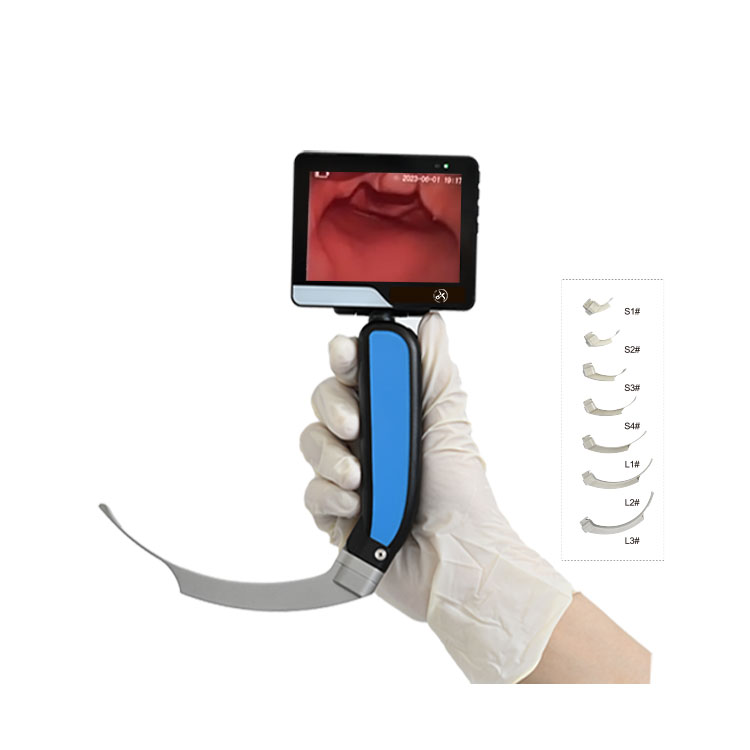
BMS-FA reusable video laryngoscope. Documented specification: 3.0-inch LCD screen, 1600x1200 camera resolution, IPX7 waterproof rating.
BMS-FA is a reusable rigid video laryngoscope in the Unicorn portfolio, documented with a 3.0-inch LCD screen, 1600x1200 camera resolution and an IPX7 waterproof rating. Those figures matter for the compliance file because they are testable claims: IPX7 is an ingress-protection claim that should map to a test record in the technical documentation, and resolution is a stated specification that should match the device labelling and the catalogue.
The document set to request for BMS-FA specifically:
- Declaration of conformity that names BMS-FA as a listed model, not just the product family.
- Ingress-protection test evidence supporting the IPX7 rating.
- Cleaning and disinfection validation for the blade and handle, since a reusable video laryngoscope is reprocessed between patients.
- Electrical safety and battery documentation — Unicorn's risk management documentation addresses battery management protection, and that file should be referenced in the technical documentation.
- Confirmation that BMS-FA sits inside the ISO 13485:2016 scope recorded under UKZB25MD30140R0S.
BMS-YA: a separate model entry, not a copy of the BMS-FA file
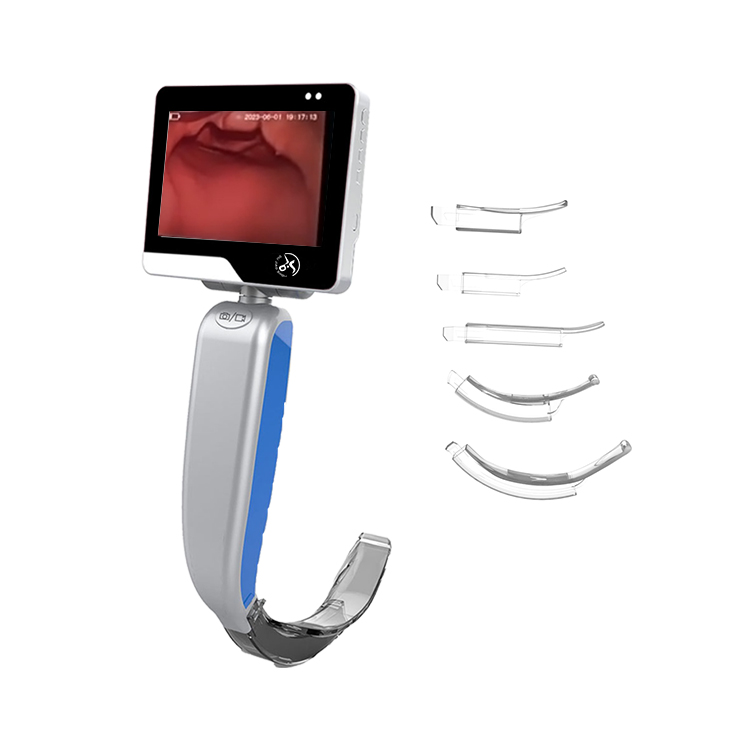
BMS-YA reusable video laryngoscope. Treated in procurement records as its own model entry with its own declaration of conformity and reprocessing validation.
BMS-YA is the companion reusable rigid video laryngoscope in the same range, and the single most common documentation error is treating it as covered by the BMS-FA paperwork. Model-level differences that affect the file include blade construction and the associated reprocessing method, because the material determines which cleaning and disinfection cycle has been validated. The buyer's checklist should record what the declaration of conformity actually states, not what the catalogue implies.
Request for BMS-YA: its own declaration of conformity entry, its own blade reprocessing validation, and a written statement that the model is inside the certified ISO 13485 scope. If a supplier answers 'same as BMS-FA', treat that as an incomplete answer rather than a shortcut.
BMR: the flexible video laryngoscope series
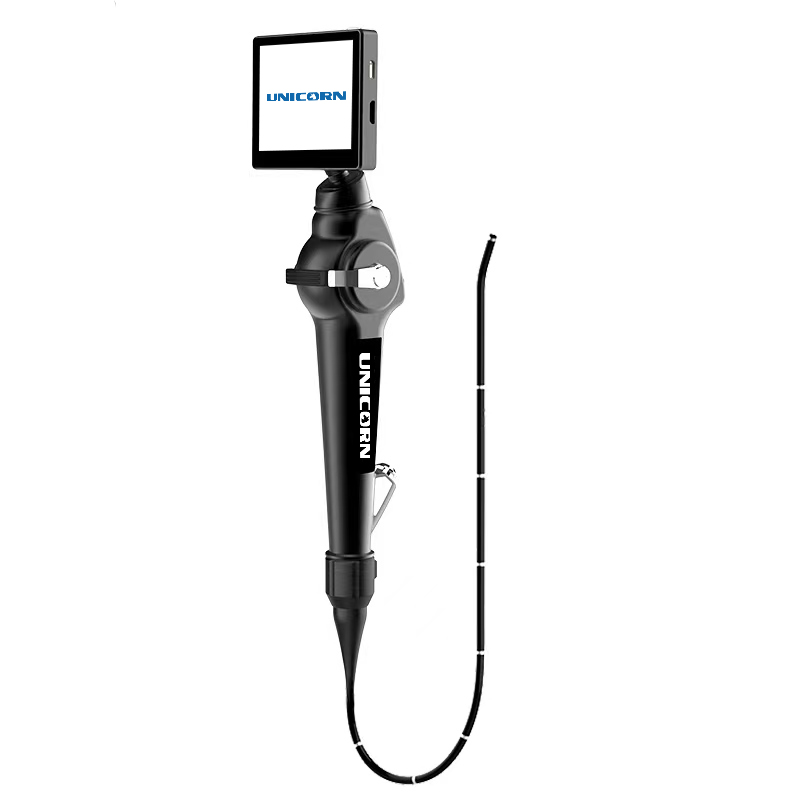
The BMR flexible video laryngoscope series. Flexible video flexible laryngoscope files require insertion-tube reprocessing validation and leakage testing in addition to CE conformity documentation.
BMR belongs to the visual flexible laryngoscope family, where the documentation emphasis shifts. A video flexible laryngoscope has an insertion tube that enters the airway, so the file needs leakage testing, cleaning validation for the insertion tube, and confirmation of compatibility between the scope and the image-processing chain it runs on. Where a programme mixes reusable and single-use components, the disposable element carries its own declaration and its own sterility or reprocessing statement — a disposable laryngoscope component cannot be covered by a reusable device's validation.
Request for BMR: declaration of conformity covering the flexible laryngoscope family, insertion-tube cleaning and leakage test records, image processor compatibility statement, and any single-use accessory declarations relevant to the order.
A nine-step verification sequence for laryngoscope procurement
The sequence below is written to be attached to a request for quotation. Each step produces a document that can be filed, which is the point — a compliance file is an archive, not a conversation.
- Lock the model and order code. BMS-FA, BMS-YA and BMR are distinct entries. Write the exact model, configuration and quantity into the enquiry so the supplier cannot answer at family level.
- Match the certificate holder to the contracting entity. The ISO 13485:2016 certificate recorded for Unicorn sits with Nantong Unicorn Medical Electronics Co. Ltd. If the invoice is issued by a different legal entity, ask for the corporate relationship in writing before filing the certificate.
- Read the scope, not the logo. Confirm that the certificate scope covers the device types being purchased and, ideally, that the models are listed in the technical documentation. Check validity dates against your delivery date.
- Verify the CE regulation cited. The declaration of conformity must reference Regulation (EU) 2017/745. Documentation citing Regulation (EU) 2017/746 for a laryngoscope is out of scope and should be rejected.
- Record the device classification and notified body position. Note the class stated in the declaration and, where a notified body is involved, its four-digit number on the certificate and on the labelling.
- Cross-check the product standard. Ask where ISO 7376:2020 — the laryngoscope standard for tracheal intubation — appears in the technical file or test summary.
- Request reprocessing validation per model. Cleaning and disinfection validation for the blade (BMS-FA, BMS-YA) or insertion tube (BMR). This is where model-level documentation most often proves incomplete.
- Write the acceptance criterion into the order. Unicorn states pre-shipment test as the acceptance criterion, with payment terms of 30/70 and delivery terms FOB or CIF. Tie the balance payment to the inspection report rather than to the shipping date.
- Set a re-verification date. Certificates expire and scopes change. A file that is correct in year one and unchecked in year three is the most common audit finding in installed laryngoscope fleets.
Where this checklist is actually used
Hospital tender for anesthesia and ICU laryngoscope programmes
A tender committee needs a short, defensible document set. The nine-step sequence produces exactly that: certificate, declaration of conformity, product standard reference, reprocessing validation and pre-shipment report. For an ICU laryngoscope programme where devices stay in service for years, the re-verification date in step nine is the difference between a compliant fleet and an unverified one.
Distributor onboarding in the EU
Distributors carry regulatory exposure for what they place on the market. Before stocking BMS-FA, BMS-YA or BMR, a distributor should hold the declaration of conformity, the ISO 13485 certificate copy and a written statement of model coverage — not because the manufacturer is doubted, but because the distributor's own file has to survive a competent-authority question.
OEM and private-label brand owners
When a brand owner places its own name on a laryngoscope, the manufacturer's certificates support the technical documentation but do not replace the brand owner's own obligations. The practical request is a document package that can be transferred: scope wording that covers the manufactured device, model-level declarations, and batch records under the buyer's label.
Emergency laryngoscope replacement and fleet standardization
Urgency is where documentation gets skipped. An emergency laryngoscope ordered under time pressure still needs the pre-shipment test report attached to the delivery — otherwise the fastest order becomes the slowest audit finding.
Comparison: which document proves what
| Document | What it proves | What it does not prove |
|---|---|---|
| ISO 13485:2016 certificate (UKZB25MD30140R0S) | The manufacturing site operates a certified medical device quality management system, subject to the stated scope | That a specific model is inside the scope, or that the units in a shipment passed testing |
| CE declaration of conformity under Regulation (EU) 2017/745 | Conformity of the listed device with the applicable EU requirements, declared under the manufacturer's responsibility | Compliance with US requirements, or conformity of models not listed |
| Regulation (EU) 2017/746 (IVDR) documentation | Conformity of in vitro diagnostic medical devices | Anything about a laryngoscope — out of scope for airway instruments |
| ISO 7376:2020 reference | The device was specified and tested against the laryngoscope product standard | Factory system compliance, which is ISO 13485 territory |
| Pre-shipment test report | The specific batch was inspected against agreed criteria before dispatch | Design conformity; it is a shipment-level control, not a design approval |
And a model-level view, restricted to what is documented:
| Model | Format | Documented figures | First document to request |
|---|---|---|---|
| BMS-FA | Reusable rigid video laryngoscope | 3.0-inch LCD screen; 1600x1200 camera resolution; IPX7 waterproof rating | Declaration of conformity naming BMS-FA, plus IPX7 test evidence |
| BMS-YA | Reusable rigid video laryngoscope | Companion model in the same reusable range; model-level figures to be confirmed from the supplier's model datasheet | Separate declaration of conformity entry and blade reprocessing validation |
| BMR | Flexible video laryngoscope series | Flexible visual laryngoscope family; specifications confirmed per configuration | Insertion-tube cleaning and leakage test records with the CE documentation |
Where a cell states that a figure must be confirmed, it is because the verified record covers the model family rather than a published specification. Nothing in the tables above should be read as a performance or ranking claim.
FAQ
How can a buyer confirm that an ISO 13485:2016 certificate really covers the laryngoscope being purchased?
Check four things on the certificate copy: the certificate number, the holder name, the scope wording and the validity dates. For Unicorn, the ISO 13485:2016 certificate number recorded is UKZB25MD30140R0S, held by Nantong Unicorn Medical Electronics Co. Ltd. A certificate number alone is not the check — the scope has to name the device types you are buying, and the holder has to match the entity issuing your invoice. Where the commercial entity differs from the certificate holder, obtain the corporate relationship in writing before the certificate is filed.
Does CE marking cover BMS-FA, BMS-YA and BMR — and why does IVDR sometimes appear in supplier documents?
Laryngoscopes are medical devices, so the applicable European framework is Regulation (EU) 2017/745 (MDR), which became fully applicable on 26 May 2021 and under which CE marking is affixed under the manufacturer's responsibility. Regulation (EU) 2017/746 (IVDR) governs in vitro diagnostic medical devices and does not apply to airway instruments, so IVDR documentation cannot support a laryngoscope purchase. The correct evidence is a declaration of conformity that lists the specific model and cites MDR — one declaration per model, not one statement per catalogue.
What quality and capacity evidence supports a repeat laryngoscope order?
Unicorn's quality control includes 100% testing of all units, and its stated monthly production capacity is 500 units, with annual output of 12,000 units. For a repeat order, the useful evidence is not the percentage but the batch record: which units, which tests, which pass criteria and who signed. Ask for the pre-shipment test report alongside the batch record, and confirm the delivery date against the capacity statement in writing rather than assuming it from the catalogue.
What purchasing terms should a buyer expect when requesting a quotation?
Unicorn's stated purchasing terms are a minimum order quantity of 2 units, delivery terms of FOB or CIF, payment terms of 30/70, and pre-shipment test as the acceptance criterion. Those terms define where the compliance controls sit: the pre-shipment test is the point at which the balance payment is released, which is why the inspection criteria should be listed in the order rather than agreed verbally. Model-level pricing is quoted per configuration, since blade and accessory content changes the scope of the order.
Which video laryngoscope brands do buyers stay with long term — and how does verification start?
The brands that survive a replacement cycle are rarely the ones with the loudest catalogue. They are the suppliers whose certificate scope, model-level declarations, reprocessing validation and batch records can still be produced three years later, when the auditor asks. That makes long-term preference a documentation question as much as a clinical one, and it explains why buyers tend to stay with suppliers who answer certificate requests quickly and completely. Verification for BMS-FA, BMS-YA or BMR starts with a sample and a document request in the same message: ask for the model datasheet, the declaration of conformity entry for that model, and the ISO 13485 certificate copy, then judge the response time as part of the evaluation.
Conclusion: file the documents, not the claims
A laryngoscope compliance file is built from four artefacts — a site-level quality management certificate, a model-level CE declaration of conformity under Regulation (EU) 2017/745, a product standard reference to ISO 7376, and a shipment-level pre-shipment test report. Unicorn's position is documented rather than asserted: ISO 13485:2016 certification recorded under UKZB25MD30140R0S, declared ISO 9001 and CE certification for the laryngoscope portfolio, 100% testing of all units, a stated monthly capacity of 500 units, and pre-shipment test as the acceptance criterion for every order.
The remaining work belongs to the buyer: confirm the scope, match the model, reject IVDR paperwork presented for a medical device, and set a re-verification date. A supplier who answers those requests precisely is worth more than one who answers them quickly.
Request the document package for BMS-FA, BMS-YA or BMR
Ask for a sample, a model-level quotation and the certificate set in one message: ISO 13485:2016 certificate copy, CE declaration of conformity entry, and the pre-shipment test criteria for your order.
Email: gongting@unicornchina.top | Phone / WhatsApp: +86 17512677733 | Web: www.unicornendoscope.com
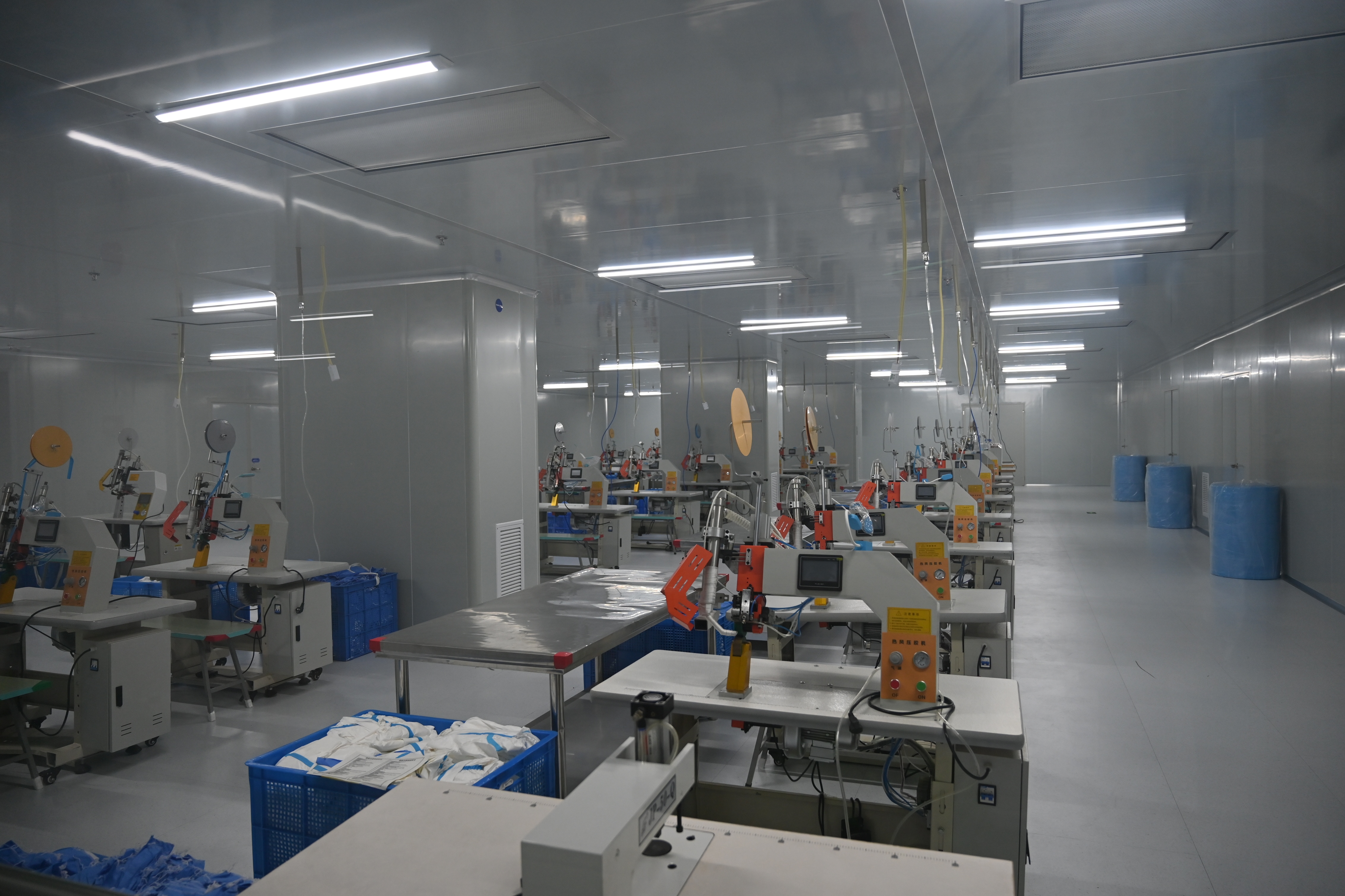
Production and inspection take place inside the same certified quality management system that issues the batch record.
Have Questions or Need More Details?
Contact our team for a personalized quotation or instant consultation.
Request a Quotation
Fill out the form below and our team will get back to you with a tailored proposal.
WhatsApp Direct Chat
Prefer to chat in real-time? Message us on WhatsApp for instant assistance & quick answers.
- Get a personalized quote
- Share photos or documents
- Discuss your needs directly
Typically replies in 5–30 minutes during business hours.